
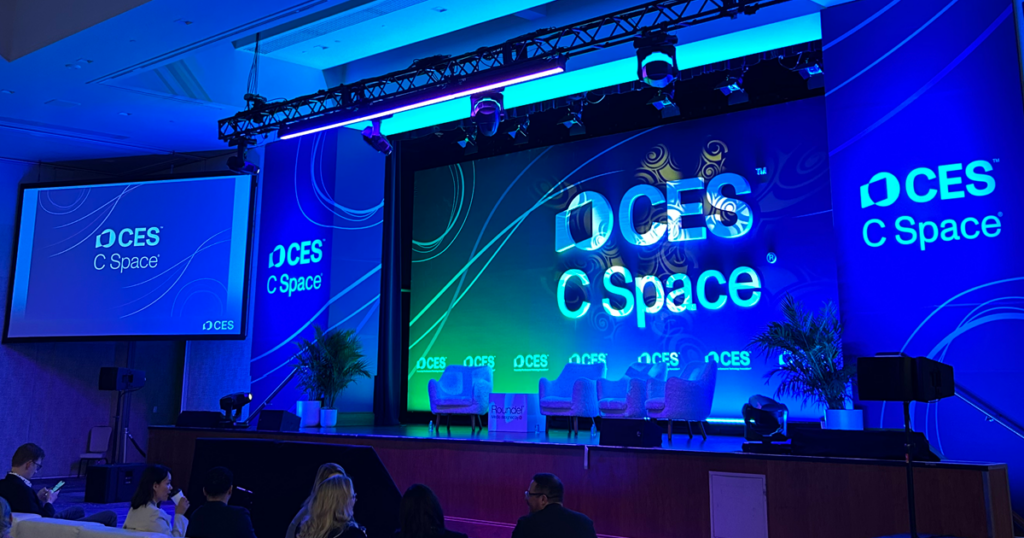
Walking the halls of CES 2026, you could feel it: the quiet hum beneath the product launches, the panel discussions, the dazzling screens. It was a hum of recognition. Not of the next shiny gadget or another incremental leap, but of a collective shift in how the industry now sees technology’s purpose.
Yes, AI was everywhere. But this year, the story wasn’t about speed or scale or even AI itself; it was about people. CES 2026 reminded the tech world, retail, media, and marketing leaders in particular, that innovation only matters when it meaningfully improves human experience. In every corner of the show, this theme echoed loudly: the future belongs to human-centered technology.
The Human Pulse Behind Retail Media’s Evolution
In conversations with retailers and media leaders, a shared conviction emerged: technology is evolving to enhance brand-consumer relationships, not replace them.
Retail media’s evolution is no longer just about sharper targeting or more data. It’s about creating experiences that feel intuitive, relevant, and human, delivering the right context in the right moment in a way that feels additive rather than intrusive. Leaders spoke about signal sharing, cross-functional partnerships, and decision-making rooted in human judgement, not just algorithmic precision. Brands increasingly want to guide and support, not chase and interrupt. Innovations on display, from autonomous shopping experiences to smarter personalized journeys, reinforced the same idea: technology should be felt as a companion, not a complication.
Creators are crucial to this human-first mission. Speaker after speaker emphasized that creator voices lend a trusted interpretation of brand messages in ways traditional channels can’t. Creators are no longer just influencers; they’re trusted storytellers and co-strategists helping brands translate insights into culture-driven narratives that consumers want to engage with.
AI’s Rapid Rise, Grounded in Human Value
Unsurprisingly, AI dominated CES. What was surprising was a shift in tone forming a new narrative that wasn’t about efficiency for efficiency’s sake.
A recurring takeaway across sessions: AI isn’t replacing people; it’s helping them stay relevant longer. In fact, the most impactful use cases were tied to experience-driven moments where human connection matters most: hospitality check-ins, retail assistance, and customer support.
In retail, AI is powering smarter audience targeting, predictive behavior modeling, and real-time personalization, all of which reinforce a critical insight echoed repeatedly at the show: AI is not for cost-cutting; it’s for growth. Brands that treat AI as an accelerator of creativity, curiosity, and connection will win the next chapter.
Wearables, Signals, and Smarter Decision-Making
Among the buzzier developments were wearables, but not the flashy versions of the past decade. This new generation of devices is built around inference such as smart glasses offering subtle contextual clues and smart assistants designed to help users make faster, better decisions.
What stood out wasn’t the hardware, but the intelligence behind it; technology that understands the user and acts on that knowledge. The tech community is now designing products for a world where devices don’t just capture signals but interpret them, helping people move through the world with less friction and more clarity. For brands and marketers, this holds tremendous potential: enabling brands to meet consumers in moments that actually matter, not simply when an ad server says the frequency cap allows it.
Brand Experimentation Is No Longer Optional
Innovation is no longer a differentiator; it’s a prerequisite. Across panels, and certainly across the show floor, there was a striking absence of fear. In its place instead is an urgency toward experimentation.
Presenters emphasized that brands willing to experiment with new modes of communication are being rewarded by consumers. Audiences today are fluent in innovation and expect brands to be as adaptive, expressive, and exploratory as the culture around them.
Creator partnerships, social-first storytelling, and AI-native content were repeatedly positioned as the new frontlines of media planning. Experimentation is no longer a “nice-to-have” as being bold is simply being relevant.
The Big Takeaway for Brands and Agencies
Technology is advancing faster than ever, but CES 2026 made one thing clear: the future belongs to brands that keep humanity at the center.
The power of emerging technology and intelligence is unlocked only when it elevates real human moments and fosters genuine connections. For agencies and brands navigating this next chapter, success will come from embracing innovation without losing sight of the people it’s meant to serve. The path forward is clear:
- Innovate boldly but design for empathy.
- Use technology to enhance connections, not replace them.
- Let creators not channels shape how stories travel.
- Adopt AI not as a shortcut, but as a supercharger of meaningful experiences.
The future of marketing isn’t simply intelligent; it’s intuitive, expressive, collaborative, and deeply human. In 2026 and beyond, the brands that will win are those that treat technology not as the destination, but as the bridge connecting people to what they value most.
For more information, visit harmelin.com, or connect with us on LinkedIn or Facebook.