
Why do we make dashboards? The answer seems simple: so you can monitor the progression of performance for insights and recommendations. Easy enough. But the question Tableau brings to the table, specifically with its coming updates, is the importance of how we see data. The game is changing, and having data displayed in front of you is the minimum requirement. It’s important to take stock of what’s coming, as these advanced techniques will help provide deeper insights and stronger recommendations, which can lead to better overall performance for stakeholders.
Tableau Keynote
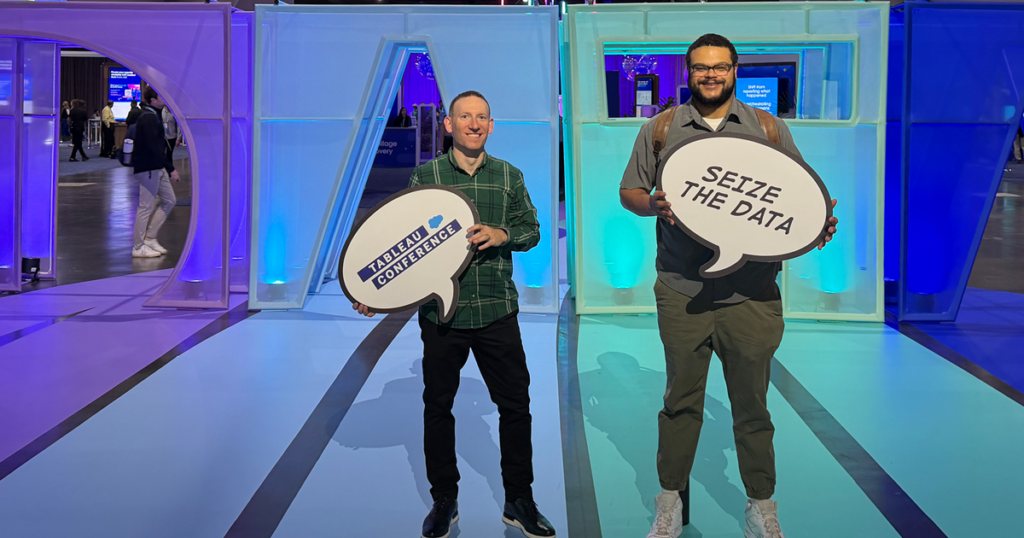
The keynote kicked off the conference, helping set the tone of what Tableau’s vision is for the future. Agentic Analytics is a major piece of what is coming, but again the question they harp on is how it will be used:
- Mark Recher (EVP and GM of Tableau) emphasized that the human component of building advanced dashboards is still very much alive. Before an Agentic AI can even get started, engineers and strategists are needed to create accurate semantic models and maintain decision engines to ensure the output of the agent is not only correct, but useful for a dashboard’s cause.
- Keynote speakers also noted the importance of the coming integration capabilities. Whether integrating with various LLMs, Slack, Microsoft Teams, or even Excel and PowerPoint, opportunities will be available for insights to be gathered and reported on faster and displayed in a meaningful way.
Dashboards, Metrics, and Agents
Another key point delivered in a session led by Laura Miller (Tableau Engineer) and Jessica Murguia (Tableau Senior Product Manager) was defining the best ways to retain data. They described three different categories to focus on to determine the need for data:
- Monitoring: focusing on key metrics and trends to maintain a sense of the progression of your performance
- Exploration: maintaining an expansive level of data to sift through, as well to handle requests and easily receive answers
- Explanation: providing structured and detailed data with clear explanations and connections to each other
These are three categories to keep in mind when dealing with dashboards and data ingestion. In some of these cases, you need a simpler dashboard focusing on key metrics, as you may need this data urgently and clearly. In other cases, you may want a dynamic dashboard full of opportunities, maintained with an AI Agent to help with requests. Or you may need a full dashboard, with multiple sections unified by key metrics, strung together to tell a complete story. There is a large spectrum between each of these categories, and it’s important you find the right spot that meets your needs.
Making Data Visualization More Accessible
On top of everything else, there are multiple changes coming to Tableau that will make it easier to display data, either in unique ways or congregated together:
- Tableau Agents will be able to search workbooks available to you to provide trusted answers or summarize whole dashboards, backed up with key trends or graphs
- Multi-layered metrics will be allowed on a same graph, allowing the ability to see primary KPIs and secondary KPIs all together
- Tableau mobile updates, allowing you to check performance on the go wherever you are
- Tableau Solve: updating how we see data tables; providing a visualization more akin to Excel, and improving forecasting, as well as visualizing potential changes in trends based off of assumed performance
There are other upcoming adjustments that will make engineering dashboards easier, in addition to providing solutions to create more intelligent AI Agents. An Agent’s primary responsibility will be to answer questions and provide insight, but very often context is needed. Engineers will be allowed to calibrate AI to provide specific details of the industry, current position, and focus of initiatives to help it provide more useful answers to the end user.
The Future Is AI, but There’s Room for More
Agentic Analytics is coming. And yes, these AI Agents will help build dashboards and answer questions, but that is not the end of progress regarding data visualization. It will be important to utilize key tools to improve AI, continue to maintain the strongest semantic models, and take advantage of updates to add more detail to dashboards, providing a more adaptive and scalable data visualization that meets your needs.
For more information, visit harmelin.com, or connect with us on LinkedIn or Facebook.