Explore how the Supreme Court’s decision to lift limits on coordinated political party advertising could drive increased election spending, impact TV and radio inventory and pricing, and shape media planning strategies for advertisers through 2028.
Current Happenings
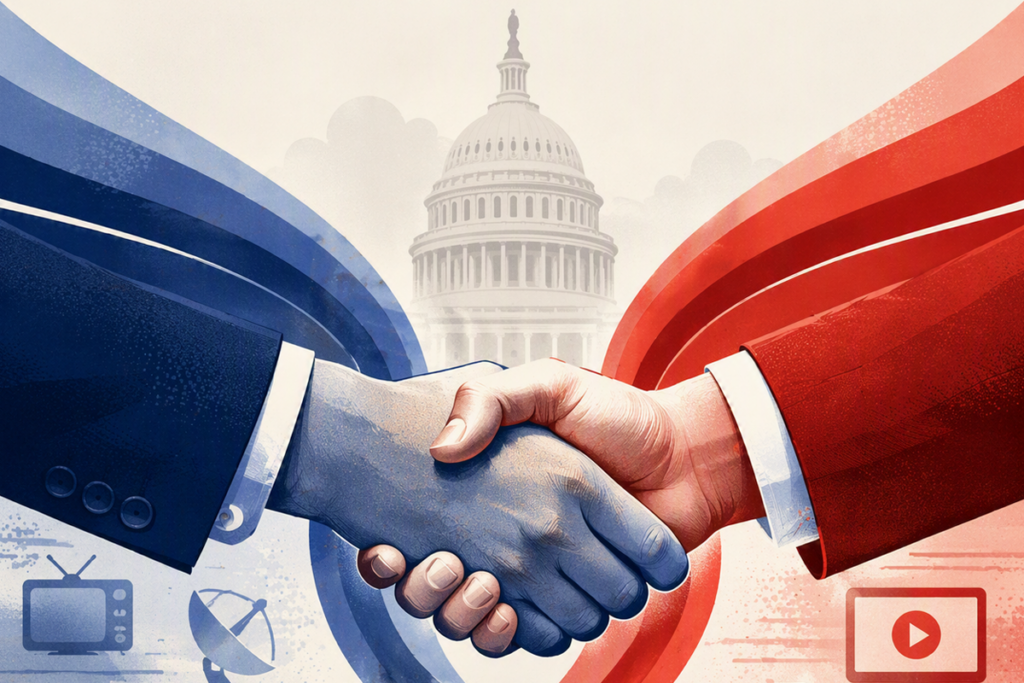
The U.S. Supreme Court ruled in early July that limiting coordination between political party and candidate ad spending was unconstitutional. Candidates for public office have long been offered the LUR (lowest unit rates) from television and radio stations, but political parties have not historically qualified for LUR, even if their ads were in support of a particular candidate.
The ruling now allows political parties to coordinate their expenditures with candidate campaigns to receive LUR on TV and radio stations.
Potential Impacts
This ruling comes after the 2010 Citizens United v. Federal Election Commission ruling, which accelerated the amount of money that funds election advertising. Ad spending has climbed exponentially since the 2010 ruling. Even before the latest ruling, anticipated spending for the 2026 midterms (which would typically see less spending than during a presidential year) is estimated to increase 4% versus the 2024 presidential election cycle, to $11.6 billion, according to AdImpact.
We anticipate the new ruling will have some influence on the 2026 general election (November 3rd) but will be far more consequential in the 2028 cycle since parties will have more time to coordinate their efforts. That said, if media properties expect more dollars to qualify for LUR, they will very likely increase LUR proactively to protect inventory, which can raise costs for other advertisers. Harmelin has a long history of negotiating rates well below market costs while still maximizing clearance and we will redouble our efforts to protect our clients’ interests throughout the upcoming season.
Recommended Course of Action
Book early — the sooner schedules are placed for the 60-day LUR protection window, the better rate consideration non-political advertisers will receive.
Adjust daypart mixes — if possible, reduce weight in news dayparts that are in highest demand from candidates.
Consider alternatives for the weeks leading up to election day — the final weeks before Election Day receive the heaviest political advertising spend.
Be flexible on pre-emptions and makegoods — and clearly communicate in advance what is and is not acceptable for ads that don’t clear on their original date and time.
Harmelin Media is an independent, full-service media agency headquartered in Philadelphia. We work exclusively as an agent for our clients, and have been serving advertisers with transparent, client-first media strategy and activation for almost 45 years.
For more information, visit harmelin.com, or connect with us on LinkedIn or Facebook.