
Evolving value expectations, AI-powered convenience, and frequency-driving customer engagement are reshaping consumer behavior across the QSR industry.
The industry is shifting away from traffic-at-all-costs strategies as operators face margin pressure and rising food costs. Restaurant marketers are increasingly prioritizing Average Order Value (AOV), premium attachments, and profitable guest behavior over pure traffic growth. Consumers are willing to spend, but only when the experience feels justified.
“Worth It” Value Is Replacing Pure Discounting
Consumers are becoming more intentional about restaurant spend, forcing QSR brands to shift focus from driving pure traffic to driving higher-quality, more profitable visits. Consumers are still dining out but are increasingly evaluating whether a meal feels “worth it” through a combination of value, convenience, quality, and experience. As competition for market share intensifies, brands must work harder to remain mentally available during key meal decision moments.
Rather than relying solely on aggressive promotions and traffic-driving tactics, QSR media strategies will increasingly prioritize loyalty, retention, and customer lifetime value. Always-on media, CRM, retargeting, Paid Search, PMAX, and personalized messaging will become even more important in driving repeat behavior and capturing high-intent demand.
Brands that will win in 2026 will be those that reduce friction between occasion and choice. Paid media must evolve beyond simply driving clicks and instead focus on reinforcing habitual behavior, convenience, and emotional relevance across the full consumer journey.
Sources:
- Business Insider – The Restaurant Metric That Matters More Than Traffic
- Nation’s Restaurant News – How Restaurants Can Win Market Share in 2026

QSR brands are rapidly evolving into technology-enabled businesses. Operators like CAVA are investing heavily in AI-powered infrastructure to improve forecasting, personalization, labor efficiency, and digital customer experiences. Across the category, brands are using technology to reduce friction and improve convenience while protecting margins.
AI-Powered Convenience Is Reshaping the QSR Experience
The restaurant industry is increasingly shifting from a traditional operations-focused model to a digitally connected ecosystem where technology influences everything from customer engagement to operational decision-making. Brands are investing in AI, automation, and connected data systems to create more seamless, personalized, and efficient dining experiences while also improving speed, labor management, and profitability. Digital convenience is becoming a baseline consumer expectation across the QSR category.
As restaurants build stronger first-party data and personalization capabilities, media will become more audience-driven and dynamically tailored to individual behaviors, preferences, and purchase patterns. QSR brands are no longer simply competing on food, price, or convenience but rather on the sophistication of their digital ecosystems. Success will increasingly depend on the ability to combine operational technology with smarter media activation to create more personalized, frictionless, and habit-forming customer experiences across the full funnel.
Sources:
- Business Insider – CAVA Is Embracing AI to Power Personalized Dining
- Restaurant365 – 7 Lessons From the 2026 State of the Restaurant Industry
- Business Insider – Your Favorite Restaurant Is Becoming a Tech Company
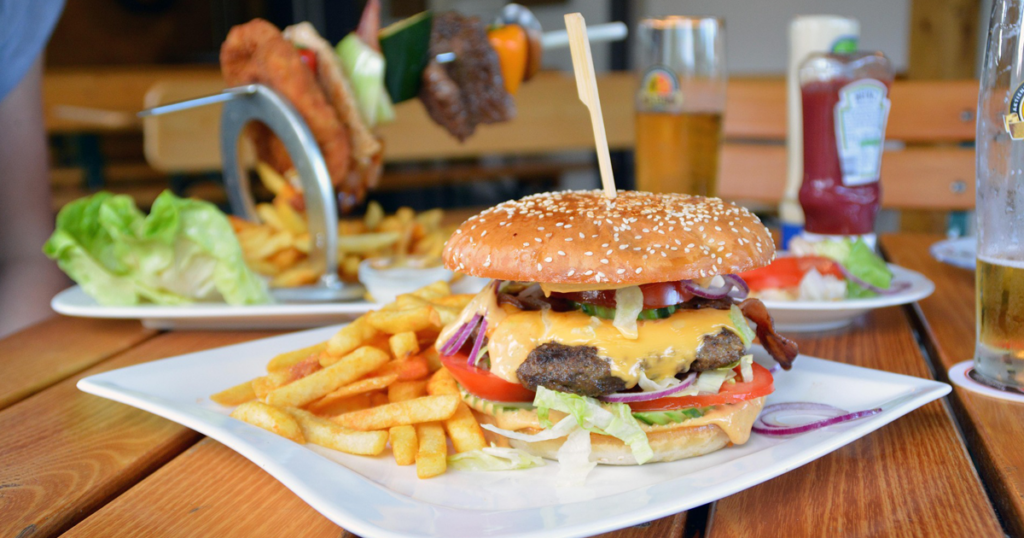
Burger King has emerged as one of the clearest examples of how operational improvements, product focus, and culturally relevant marketing can drive measurable momentum in QSR. Rather than relying solely on discounting, the brand doubled down on improving its core Whopper product, restaurant experience, loyalty, and emotional connection with consumers. The strategy has helped Burger King outperform several major competitors in recent months.
“Reclaim the Flame” Is Reigniting Burger King Growth
Instead of leaning entirely on short-term promotional pricing, Burger King has prioritized rebuilding consumer confidence in the brand through more consistent execution, sharper positioning, and renewed emphasis on its flagship menu offerings. Early performance indicates that simplifying the consumer proposition and reinforcing recognizable brand strengths is resonating with diners looking for dependable, high-quality experiences.
This reflects a broader trend within the QSR industry where brands are increasingly shifting away from chasing constant novelty and instead strengthening core menu items and emotional brand connection. Consumers continue to seek value, but “value” is increasingly tied to trust, consistency, and perceived quality rather than lowest price alone. Burger King’s strategy demonstrates that investing into foundational brand assets can help drive both traffic and long-term brand health.
From a paid media perspective, this reinforces the importance of balancing short-term conversion tactics with long-term brand building. Product-focused storytelling, culturally relevant creative, and consistent upper-funnel visibility help strengthen recall and improve performance across lower-funnel demand capture channels over time.
Sources:
- Business Insider – Burger King’s Comeback Plan to Become the Best Burger Chain
- Wall Street Journal – Burger King Spiffs Up the Whopper and Sales Rise
For more information, visit harmelin.com, or connect with us on LinkedIn or Facebook.