
2026 marks a pivotal turning point for marketing. The convergence of artificial intelligence, evolving consumer expectations, and a rapidly shifting competitive landscape has fundamentally changed how brands create relevance and loyalty.
Consumers today are simultaneously skeptical of and engaged with AI. They demand greater control over their experiences and expect brands to deliver personalized value across every touchpoint. At the same time, AI is lowering barriers to entry for competitors and accelerating disruption from unexpected sources, from AI-native startups to private-label alternatives and resale marketplaces.
For marketers, the implication is clear: scale alone no longer guarantees advantage. Instead, success will depend on how effectively — and authentically — organizations integrate AI, leverage high-quality data signals, and operationalize personalization across the customer journey. The brands that succeed will not simply adopt AI tools or run more targeted campaigns. They will build intelligent, adaptive marketing systems capable of learning, optimizing, and personalizing experiences continuously.
AI Is Moving from Experimentation to Enterprise Infrastructure
Artificial intelligence has quickly evolved from a promising innovation into a foundational capability for many organizations. Across industries, AI adoption is shifting from isolated experiments toward deeper integration into core operating models. Most organizations remain early in this transition, with many still experimenting or piloting limited use cases. Yet the trajectory is clear: AI is becoming core infrastructure rather than an optional marketing tool. As AI capabilities scale, the competitive advantage is shifting from simple adoption to how effectively organizations integrate AI into decision making, operations, and customer experiences.
Within marketing specifically, AI is transforming the operating model in several key ways:
- Automating execution and campaign management,
- Enhancing signal analysis and predictive insights,
- Accelerating optimization and decision speed, and
- Shifting teams toward strategic orchestration and insight development.
The result is a new marketing paradigm where insight velocity and execution agility become strategic advantages.
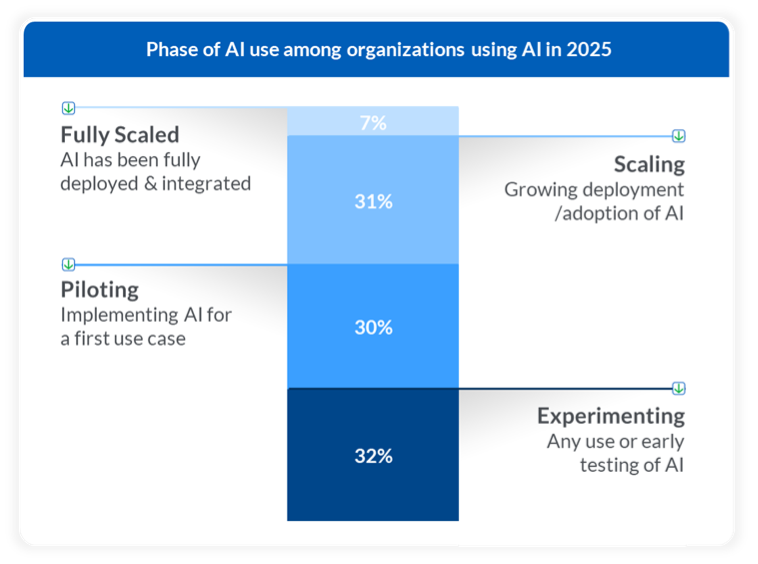
Source: McKinsey – The State of AI 2025; PwC CEO Survey 2026
AI Is Reshaping the Competitive Landscape
Just as AI is enabling new marketing capabilities, it is also introducing new competitive pressures. By reducing legacy barriers to entry, AI is allowing challenger brands and emerging platforms to scale faster than ever before. In many categories, disruption now comes from unexpected sources, including:
- AI-native startups,
- Private-label alternatives and “dupe” brands,
- Direct-to-consumer entrants,
- Platform marketplaces, and
- Circular commerce and resale ecosystems.
These competitors often move faster and operate more efficiently than legacy brands. The implication for established companies is profound: price and distribution advantages are no longer sufficient to protect market share. Instead, differentiation must come from brand meaning, customer experience, and trust.
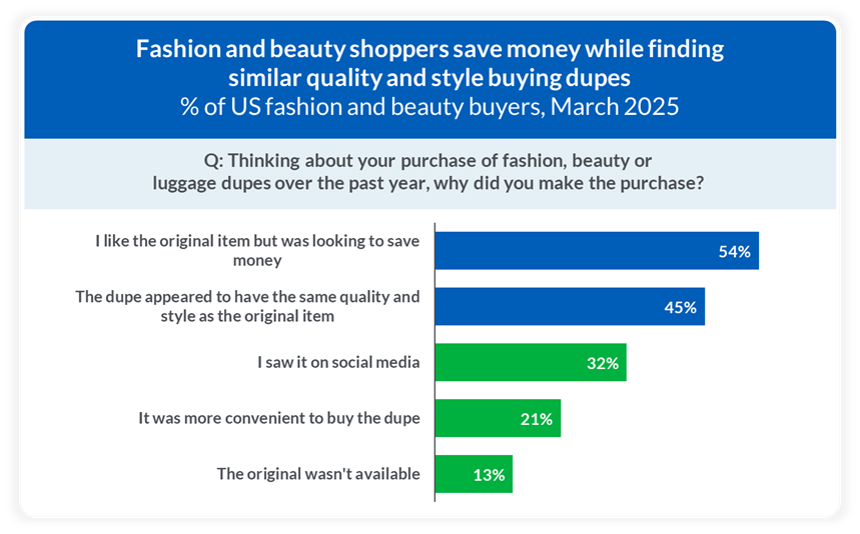
Source: Circana via eMarketer
Consumers Are Skeptical of AI — But Still Using It
Despite rapid adoption, consumer sentiment toward AI remains complex. Research shows that many consumers express concern about AI’s growing presence in everyday life. Issues such as accuracy, transparency, privacy, and bias continue to shape consumer perceptions.
Yet adoption continues to grow rapidly. More than half of consumers are already experimenting with or regularly using generative AI tools, and many interact with AI daily — often without realizing it. Consumers increasingly rely on AI for practical tasks such as information gathering, work productivity, and shopping research & recommendations. As reliance grows, expectations rise accordingly. Consumers now expect AI-enabled experiences to be fast, accurate, helpful, and personalized.
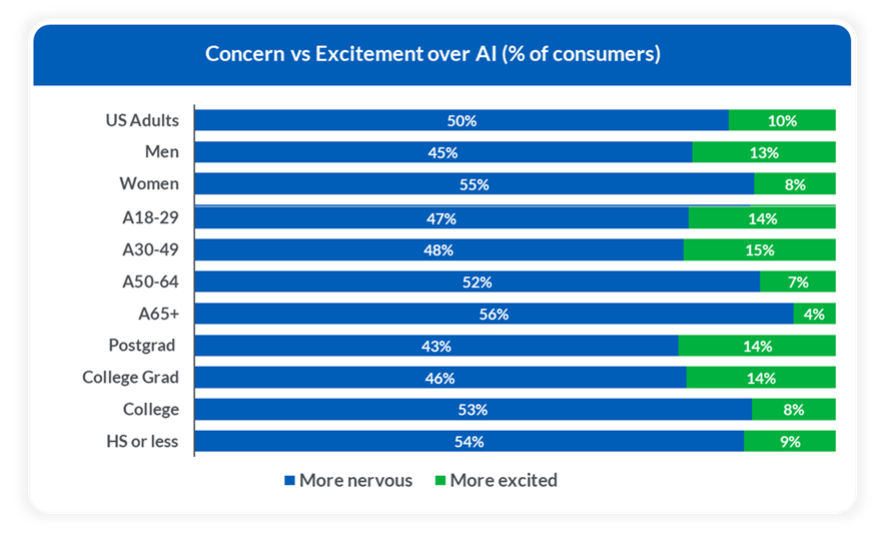
Source: YouGov; Pew Research; McKinsey
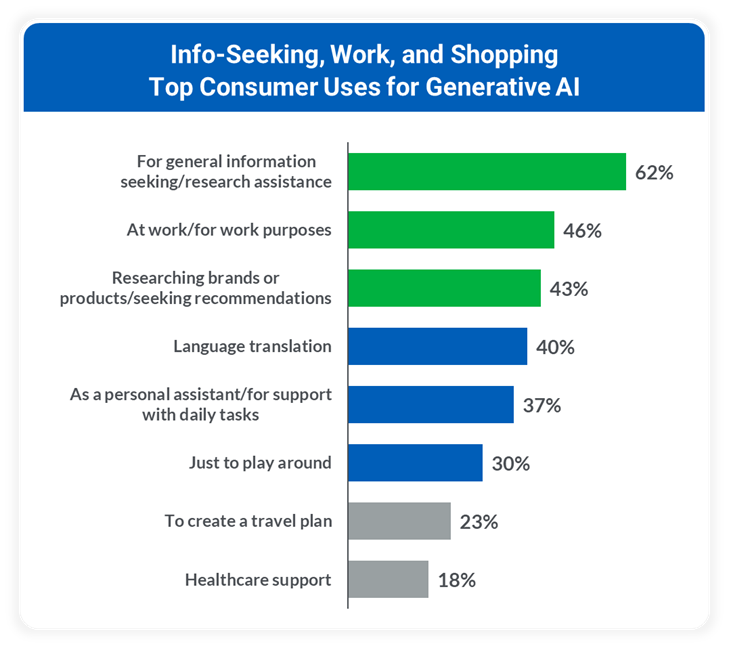
Source: YouGov; Pew Research; Boston Consulting Group
Choice and Convenience Are the New Baseline
Alongside AI adoption, consumer expectations around flexibility and convenience have expanded dramatically. Today’s consumers expect brands to offer a wide range of options across the entire customer journey. Examples include social commerce, same-day delivery, frictionless returns, buy-now-pay-later options, flexible subscriptions, and loyalty programs.
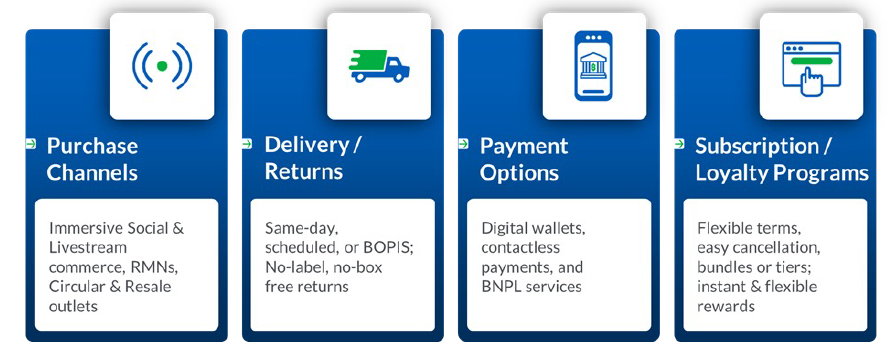
These expectations reflect a broader shift: consumers are no longer willing to adapt to brand systems — brands must adapt to consumer preferences. The companies that succeed will be those capable of delivering these experiences seamlessly across channels.
Personalization Is Now a Core Growth Engine
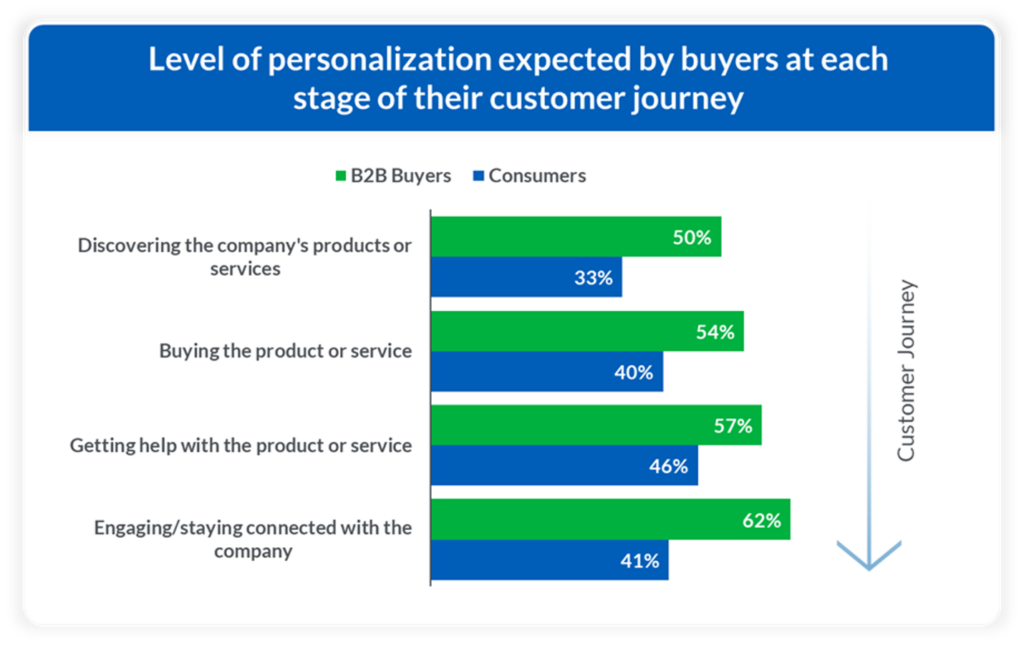
As expectations evolve, personalization has moved from a marketing tactic to an enterprise growth strategy. Advances in AI and data infrastructure now enable organizations to deliver real-time, predictive personalization across the entire customer journey.
Notably, expectations are rising across both consumer and business markets. In many cases, B2B buyers now expect even higher levels of personalization than B2C customers, particularly for complex, high-stakes purchasing decisions.
For marketers, personalization success increasingly depends on four foundational elements:
- Strong data foundations (first-party, zero-party, and behavioral data),
- Advanced analytics and AI models,
- Personalization orchestration across consumer touchpoints, and
- Integrated customer experience and media activation.
Source: Gartner; McKinsey; Forrester
Personalization Directly Drives Marketing Performance
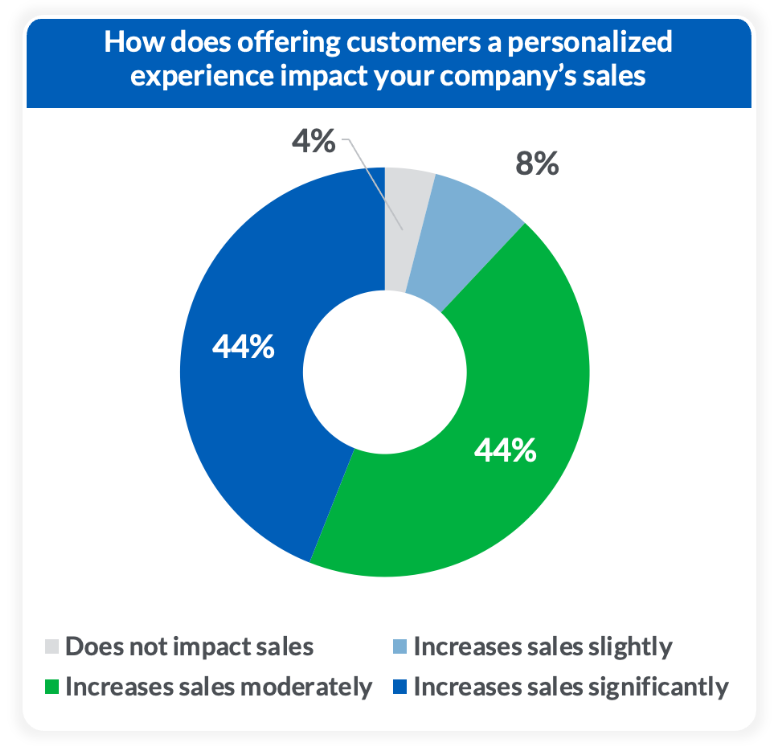
The business case for personalization is now well established. Companies that successfully personalize experiences see improvements across multiple performance metrics, including engagement, conversion rates, retention, and customer lifetime value.
Research shows that 81% of consumers ignore “irrelevant” marketing messages, while one in four consumers are less likely to purchase when receiving generic communications. In an environment where budgets are increasingly scrutinized, personalization offers a powerful efficiency advantage. (McKinsey, Personalization & Growth Effectiveness 2025; Attentive Consumer Trends Report: The State of Personalized Marketing, 2025.)
Source: McKinsey; Salesforce; HubSpot
The Personalization Gap — Strategy vs. Execution
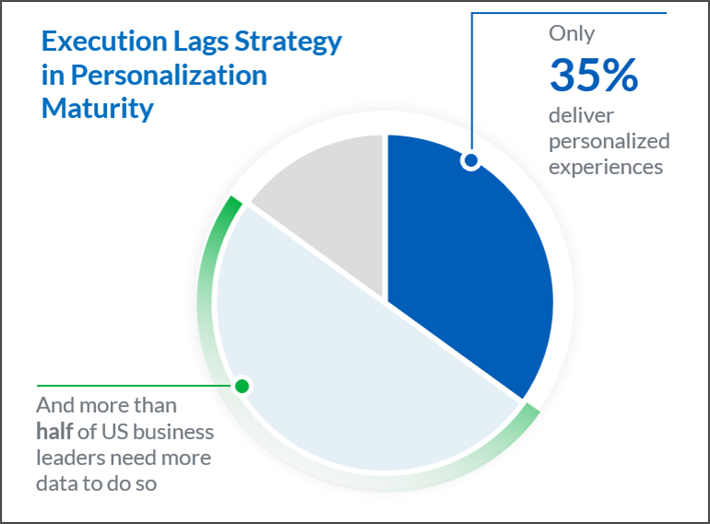
Despite widespread recognition of personalization’s value, many organizations still struggle to implement it effectively. While companies aspire to deliver highly personalized experiences, only a minority currently have the data, technology, talent, and/or operating models required to do so at scale. Closing this gap requires more than new technology. It requires coordinated transformation across data infrastructure, marketing operations, creative production, measurement frameworks, and organizational capabilities.
Source: Deloitte Marketing Transformation Research; LiveRamp Personalization Playbook
Consumer Control Is the New Loyalty Driver
A major shift is occurring in how consumers engage with personalization. Historically, personalization was largely passive, driven by algorithms recommending products or targeting ads. Today, consumers increasingly want active control over their experiences. When consumers feel in control of their experiences, trust increases. And when trust increases, so do conversions, satisfaction, and long-term loyalty.
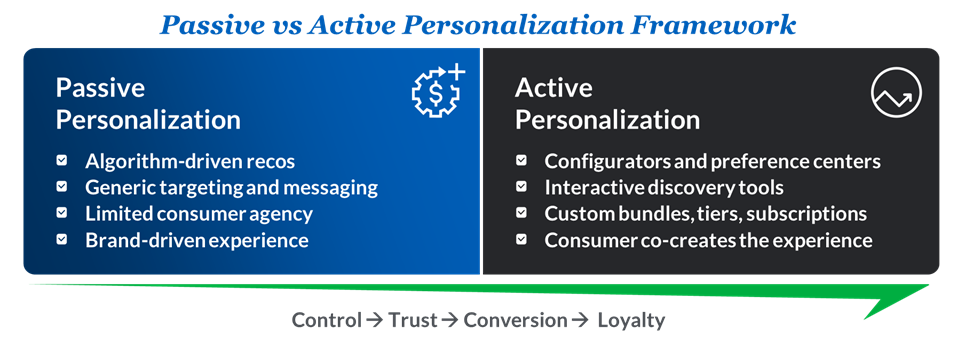
Source: Deloitte Connected Consumer; McKinsey Next in Personalization
The Future of Marketing — Intelligence, Relevance, and Trust
Taken together, these trends point toward a fundamental shift in marketing strategy. AI is accelerating competition and lowering barriers to entry. Consumers are adopting new technologies while demanding greater transparency and control. And personalization has become a baseline expectation rather than a differentiator.
For marketers, the path forward requires three priorities:
- Deliver relevant personalization that creates clear and meaningful value for consumers.
- Build intelligent marketing systems that integrate AI across data, media, and creative workflows.
- Earn trust through transparency, control, and responsible data use.
In the emerging AI-driven marketing landscape, the winners will not simply be those with the most data or the largest budgets. They will be the organizations that combine technology, insight, authenticity, and trust to deliver meaningful value, at scale.
For more information, visit harmelin.com, or connect with us on LinkedIn or Facebook.