
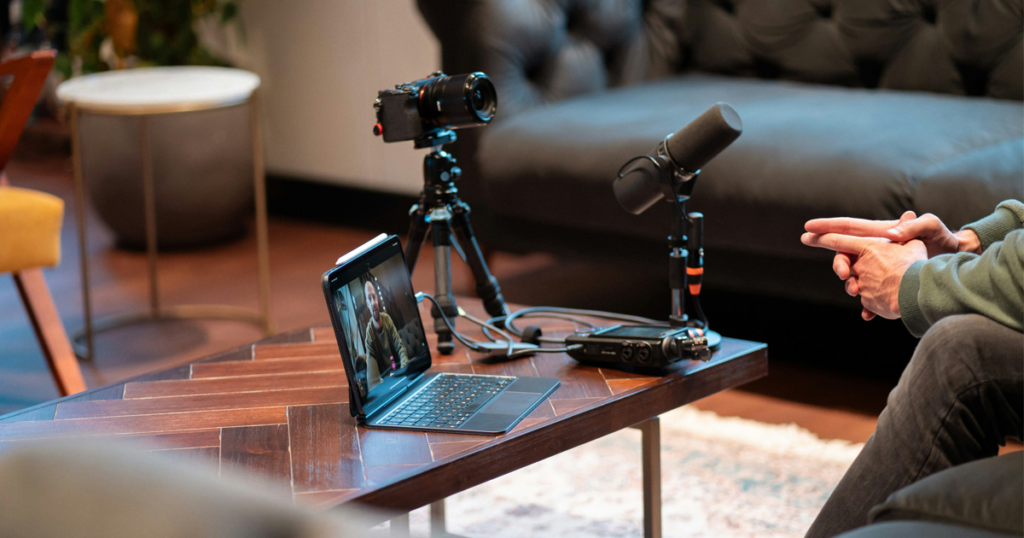
Podcasting has officially entered its mass media era.
That was one of the biggest takeaways from the CES session “Podcasting’s Next Chapter: Unlocking Growth for Creators & Advertisers.” What started as an audio-only, on-the-go medium has evolved into something much bigger, something that increasingly looks and behaves like a multi-platform “show,” not just a podcast.
For those of us working in influencer and creator marketing, the parallels felt especially familiar.
From Podcasts to “Shows”
During the session, iHeartMedia President Will Pearson shared his stance that podcasting is no longer just consumed in cars or through earbuds. As video has become a larger part of the ecosystem, podcast consumption is shifting into the home and onto the big screens. For listeners who already tune in to their favorite podcasts at home, this extension to the screen simply adds another option to watch the same way you might watch a daytime or late-night talk show.
This evolution has reached a new level with iHeart’s recent partnership with Netflix. While podcasts remain audio-first, long-form video versions of select shows will live exclusively on Netflix, opening the door to entirely new audiences. As traditional linear TV viewership continues to decline, podcast video is booming, and legacy media players are paying attention. Hernan Lopez, founder of podcast network Wondery, suggested we keep our eyes (and ears) open for more big partnerships coming this year.
Audio Isn’t Going Anywhere, but Video Is Fueling Growth
A big question raised during the session: Is audio-only podcasting becoming the exception? The consensus: not at all.
Audio remains a uniquely intimate medium; human voices carry subtle cues that convey emotion, authenticity, and personality, allowing the listener’s imagination to fill in the gaps. Will emphasized that audio will remain both the heart of podcasting and its most intimate form. What is growing rapidly is video consumption, often as a discovery tool. Short-form video clips circulate on social platforms, pulling new audiences into full episodes either to watch or listen. When choosing to watch, what once felt like a personal phone call with our favorite hosts and guests can now feel like a casual living room hangout. This visual expansion mirrors what we’ve seen across influencer and social marketing for years: video doesn’t replace other formats; it amplifies them.
The Rise of 360 Podcast Partnerships
Another major theme was how brands are buying into podcasts.
We’re seeing more podcast deals that look less like traditional media buys and more like creator partnerships: holistic programs that include social extensions, video, live events, and more.
Legacy performance marketers often still view podcasting through an audio-only lens, focused on host-read spots and direct response. Brand marketers, on the other hand, are approaching podcasters the way they approach influencers: as multichannel creators with communities that extend well beyond a single platform.
Sound familiar? Influencer marketing went through this exact evolution over the last decade, from one-off sponsored posts to long-term partnerships spanning multiple channels. Podcasting is now following that same trajectory.
Paige Port, President of Dear Media, reinforced that creators don’t see podcasting as a standalone channel. For them, audio is simply another distribution point. If a creator is already partnering with a brand on social, it feels natural and authentic to integrate that brand into podcast episodes, video clips, and other touchpoints.
The creator-first approach that brings a face to the voice has transformed these shows into modern talk-show equivalents, with better unit economics and deeper audience connection.
Younger Audiences, New Viewing Habits
Jordan Fox, CEO of Ad Results Media, noted that younger consumers are increasingly consuming video podcasts on platforms like YouTube and even X. Whether it’s creators, platforms, or audience behavior driving the shift, the result is the same: podcasts are being reframed visually.
Interestingly, many of today’s “man-on-the-street” social videos, like those from SubwayTakes, look a lot like short-form podcasts that are sliced, clipped, and optimized for feeds. The line between social content and podcasting continues to blur.
AI and the Value of “Guaranteed Human”
One of the more nuanced discussions centered on AI. Given the deeply personal nature of podcasting, AI has (so far) played a smaller role than in other media formats. From an agency perspective, Jordan has noticed that some scripts have recently sounded “off,” raising concerns about AI-generated reads and just how obviously impersonal they come across.
Will highlighted what iHeart sees as a major opportunity: leaning hard into the humanity of podcasting. iHeart has committed to “guaranteed human” content, ensuring listeners know they’re hearing real voices from real people across the iHeartMedia ecosystem. In a media landscape increasingly shaped by automation and synthetic content, that intimate human connection may become podcasting’s biggest differentiator.
What This Means for Brands and Agencies
Podcasting’s next chapter looks a lot like influencer marketing’s last decade:
- Audio remains foundational, but video fuels discovery and scale.
- Creators are multi-platform brands, not single-channel publishers.
- 360 partnerships are becoming the norm, not the exception.
- Authentic, human connection remains the core value exchange.
For advertisers and agencies, the opportunity isn’t merely buying podcast inventory, but partnering with creators in ways that feel cohesive, platform-native, and audience-first. Podcasting may have started as an audio medium, but its future is unmistakably creator-led, multi-platform, and deeply human.
For more information, visit harmelin.com, or connect with us on LinkedIn or Facebook.