
This quarter’s healthcare update explores how GLP-1 therapies are expanding beyond weight loss, why behavioral health is becoming a more integrated part of healthcare, and how affordability challenges are increasingly shaping patient care decisions and access to treatment.

GLP-1 therapies continue to make headlines for weight loss, but that’s becoming only part of the story. Researchers are increasingly finding potential applications for these medications across conditions such as cardiovascular disease, chronic kidney disease, sleep apnea, and liver disease. As evidence grows, healthcare organizations are beginning to rethink how obesity fits into long-term health management.
GLP-1s Expand Their Reach
The conversation around GLP-1 therapies is getting much bigger than weight loss. While these medications first gained widespread attention for helping people manage diabetes and obesity, they are now showing promise across several of healthcare’s most pressing chronic conditions. Recent reporting from The American Journal of Managed Care highlights how patients taking GLP-1 therapies are increasingly carrying diagnoses beyond diabetes and obesity, reflecting the growing role these medications may play throughout the healthcare ecosystem.
Much of the excitement stems from research showing benefits that extend well beyond weight loss. For example, the landmark SELECT trial found that semaglutide reduced the risk of major cardiovascular events, including heart attack and stroke, by 20% in adults with overweight or obesity and established cardiovascular disease. Researchers are also exploring the potential of GLP-1 therapies in areas such as chronic kidney disease, obstructive sleep apnea, and metabolic dysfunction-associated steatohepatitis (MASH), broadening the conversation around what these medications may ultimately be able to treat. Recent MASH research found that 63% of patients receiving semaglutide achieved disease resolution compared with 34% receiving placebo, further fueling interest in the therapy’s expanding role.
What makes this trend particularly noteworthy is that GLP-1s are no longer confined to a single specialty. What began as a treatment primarily associated with endocrinology and weight management is now drawing interest from cardiologists, nephrologists, sleep specialists, hepatologists, and primary care providers alike. Rather than treating obesity as a standalone condition, healthcare organizations are increasingly recognizing its role as a driver of multiple chronic diseases and rethinking how care is coordinated across specialties.
As patient awareness and demand continue to grow, many health systems are investing in more integrated obesity programs that combine medical weight management, nutrition support, behavioral health services, and specialty care. The next chapter of GLP-1 adoption may be less about weight loss alone and more about their potential to reshape how chronic disease is managed across the healthcare continuum. As evidence continues to expand, healthcare organizations may increasingly view GLP-1s not as a treatment for a single condition, but as a tool that connects multiple areas of care.
Sources:
- Patients on GLP-1s Increasingly Carry Diagnoses for New Indications
- GLP-1 Therapies in 2026: Beyond Blood Sugar and the Scale

Behavioral health is becoming increasingly intertwined with overall health, workplace well-being, and chronic disease management. As demand for mental health services continues to rise, healthcare organizations, employers, and payers are finding new ways to expand access and bring support closer to where people already receive care.
Behavioral Health Goes Mainstream
Mental health support is showing up in more places than ever before, and that’s changing the way care is delivered. Not long ago, accessing behavioral health services often meant finding a specialist and seeking care separately from the rest of the healthcare experience. Today, support is being woven into primary care offices, chronic disease management programs, virtual care platforms, and even employer wellness initiatives. Rather than existing on the sidelines of healthcare, behavioral health is becoming part of everyday care.
One of the clearest examples of that shift can be seen in telehealth. According to Trilliant Health’s 2026 Behavioral Health Report, behavioral health utilization increased 62.6% between 2018 and 2024, and behavioral health services now account for 65.6% of all telehealth visits, up from just 18.4% in 2018. What began as a way to expand access during the pandemic has evolved into one of the primary ways patients seek mental health support, helping make care more convenient and accessible.
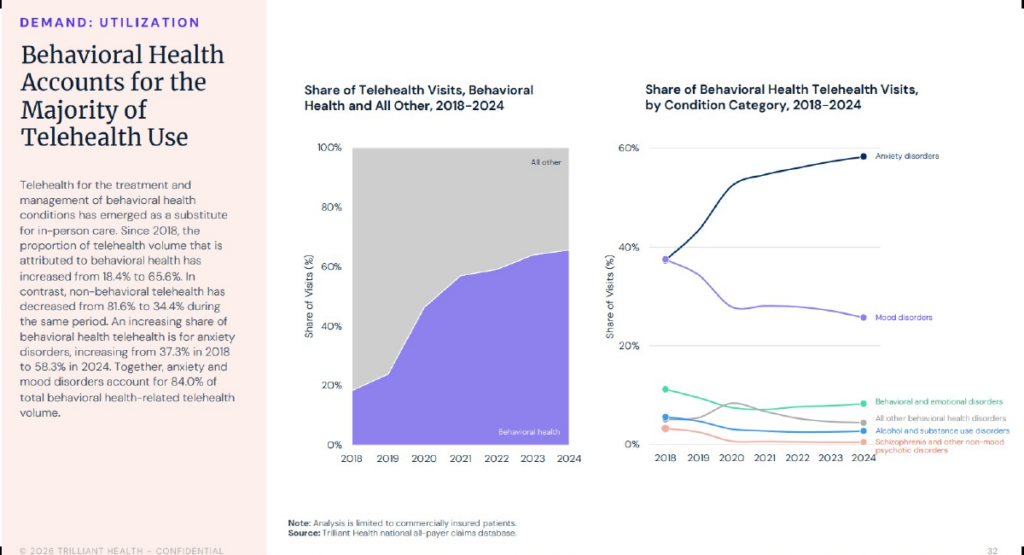
Behavioral health accounted for 65.6% of all telehealth visits in 2024, highlighting its growing role in everyday healthcare delivery.
The shift extends well beyond virtual care. Employers are investing more heavily in counseling services, digital therapy tools, and well-being resources as they recognize the impact mental health can have on productivity, retention, and overall workforce health. Healthcare organizations are taking a similar approach, embedding behavioral health into broader care models as they recognize that anxiety, depression, and stress often influence physical health outcomes just as much as emotional well-being.
Perhaps the biggest takeaway is that behavioral health is no longer being treated as a separate service line. Instead, it’s becoming a core part of whole-person care. Whether support is delivered through a primary care provider, a virtual visit, or a workplace wellness program, the focus is increasingly on making mental health support easier to access earlier in a person’s health journey. In many ways, the future of behavioral health may be less about creating new places for people to get help and more about ensuring support is available wherever care is already happening.
Sources:
- 2026 Behavioral Health Report | Trilliant Health
- 10 Trends Transforming Behavioral Health in 2026 | Becker’s Behavioral Health
- Mental Health Trends Shaping Care in 2026 | Grow Therapy

Healthcare affordability continues to be a significant challenge for consumers, influencing everything from insurance coverage decisions to whether individuals seek care at all. As healthcare costs rise and household budgets remain strained, many Americans are delaying or avoiding care, creating implications for both individual health outcomes and broader healthcare utilization.
The Cost of Waiting
For many Americans, healthcare affordability is no longer something they think about only during open enrollment. It influences everyday decisions, from whether to refill a prescription to whether a doctor’s visit can wait a little longer. As household budgets remain under pressure, healthcare is increasingly competing with other essential expenses, forcing many consumers to make difficult tradeoffs.
Those tradeoffs are becoming more common. According to Healthcare Affordability Pulse Spring 2026, more than one-third of consumers have delayed or avoided care because of cost concerns, while separate research found that 42% of Americans skipped or postponed medical care in the past year due to inflation and financial pressures. The impact is especially noticeable among adults who have not yet reached Medicare eligibility, with 52% reporting they delayed or skipped care because of inflation, compared with 27% of Medicare beneficiaries. At the same time, 64% of Americans said inflation affected their ability to pay for necessities such as food, clothing, and housing, highlighting how healthcare costs are increasingly competing with other household priorities.
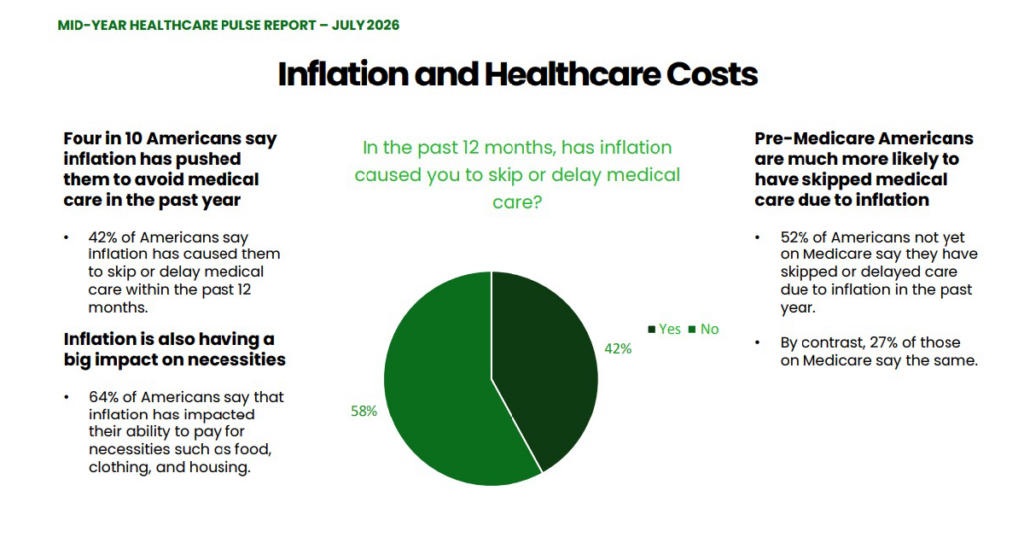
Four in 10 Americans say inflation has caused them to skip or delay medical care, highlighting the growing impact of affordability on healthcare decisions. Healthcare Pulse Report 2026 (page 3)
What’s particularly concerning is the type of care people are putting off. Preventive screenings, specialist appointments, follow-up visits, and prescription medications are often among the first healthcare expenses consumers delay when budgets tighten. While that may provide short-term financial relief, it can also allow health issues to worsen over time, ultimately leading to more complex care and higher costs down the road. In many ways, the healthcare industry is beginning to see the ripple effects of consumers choosing between care today and affordability tomorrow.
Perhaps the bigger story is that affordability is becoming a larger factor in how consumers engage with healthcare altogether. As patients take a more active role in managing healthcare costs, they’re looking for clearer information about coverage, out-of-pocket expenses, and available financial resources before making care decisions. That demand is likely to grow as affordability concerns extend beyond today’s medical bills. According to the eHealth survey, 82% of adults who have not yet reached Medicare eligibility worry about healthcare costs in retirement. In many ways, the future of healthcare affordability may be less about reducing costs alone and more about helping consumers better understand, navigate, and plan for the cost of care before it becomes a barrier to treatment.
Sources:
- HealthEquity Healthcare Affordability Pulse Spring 2026
- Healthcare Pulse Report 2026
- 42% of Americans Have Skipped or Delayed Medical Care Due to Inflation
- How Has ACA Marketplace Enrollment Changed Across States in 2026?
For more information, visit harmelin.com, or connect with us on LinkedIn or Facebook.