
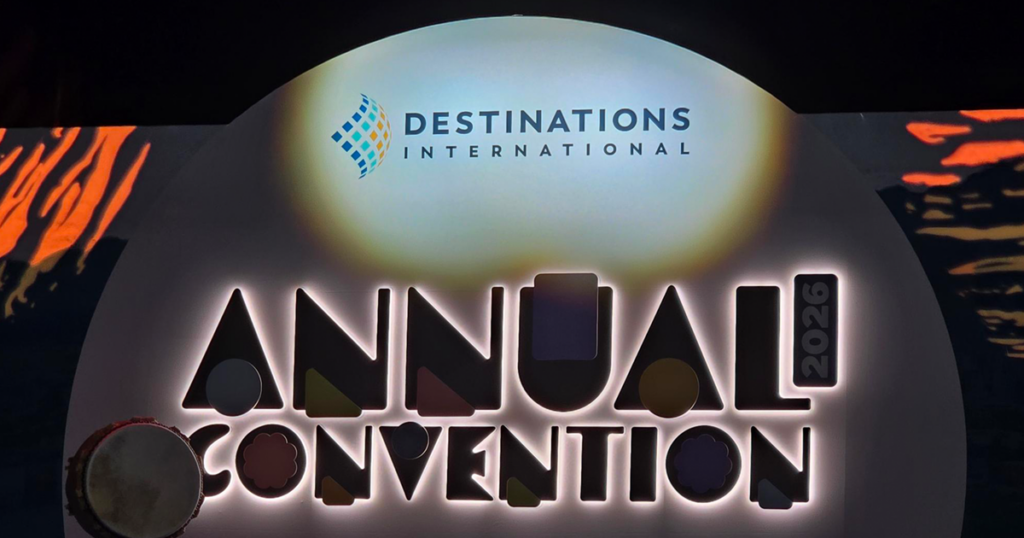
The City of Roses welcomed the travel industry to collaborate on skills, strategies, and solutions. The Destinations International Annual Convention held July 20–23 in Portland, OR brought together nearly 2,000 attendees from 29 countries. Destination marketing organizations from across the country and around the world convened to collaborate, learn, and explore how local partnerships, accessibility, sustainability, and content strategy can fuel tourism growth. Over three days, meaningful engagement with peers who are redefining revenue growth, strengthening community trust, building resilient teams, and delivering measurable results sent us home with new energy.
As the leader of Harmelin’s Travel and Tourism Center of Excellence, I attended the convention with our clients’ needs in mind — from international and local destinations to organizations with varying goals, objectives, and access to data.
The opening keynote by Jeremy Gutsche, founder of TrendHunter.com, the world’s leading trend platform and innovation advisory, and New York Times bestselling author, set the stage for the convention theme, which was for destination marketers to get ready to get out of their comfort zones.
One of the most compelling sessions I attended, Creating Travel Content that Inspires, was led by Expedia and challenged a familiar tourism marketing assumption: that driving people to a destination website should be the primary measure of success. Expedia argued that the more meaningful metric is total engagement with the content itself, especially video, across every channel and platform where it appears, including influencer handles. Consumers engage with the same content in different ways across different channels, and each touchpoint plays a role in shaping interest and intent.
The closing session followed a similar theme, focusing on Storytelling: building trust, connection, and differentiation. In an era of fragmented attention and manufactured content, the destinations breaking through are not necessarily the loudest; they are the most human. Audiences are gravitating toward voices that feel real — podcasts over press releases, analog experiences over algorithmic feeds, and creators who show up with conviction over brands that play it safe. It is difficult to admit, but the brand we try to control is no longer the only brand the audience sees. Today’s traveler may spend a single hour researching across six channels — Reddit, TikTok, Meta, Tripadvisor, ChatGPT, YouTube, and yes, the destination website — each offering a different impression. These sources do not talk to each other, yet together they shape brand perception.
Overall, the convention was a valuable gathering of tourism professionals sharing ideas, challenges, and a clear marketing theme: authenticity is no longer a differentiator; it is the baseline. Content control has evolved into human storytelling, which means giving audiences the kinds of content they actually respond to and helping destination organizations show up with the clarity and purpose that turns inspiration into connection.
For more information, visit harmelin.com, or connect with us on LinkedIn or Facebook.