Most businesses still think about their websites as destinations for human visitors, and they’re not wrong. We see every day in our Google Analytics data that AI-driven traffic, for most sites, is still a relatively small portion of the pie. We optimize websites for the human experience — to answer questions, build trust, and generate leads — but make certain assumptions about what our audience already knows or understands about the brand.
But what if that assumption is starting to change?
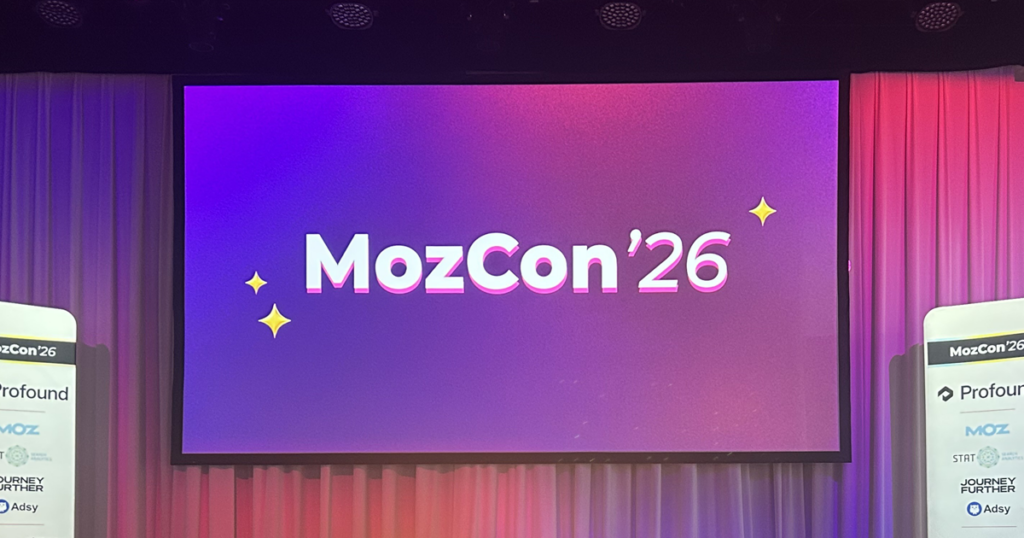
I recently attended MozCon in New York City, and my biggest takeaway wasn’t a brand-new SEO tactic or fool-proof content strategy. Sure, AI was the topic on everyone’s minds as we all adjust to new AI-generated search experiences. However, one speaker’s projections stood out amongst the rest and really put into perspective some of the recommendations others had been providing:
During his MozCon presentation, Mike King predicted that AI bot traffic could surpass human traffic by 2027.
Whether that timeline proves accurate is almost beside the point. The larger implication is that businesses should begin asking a new question: if AI systems are becoming part of the customer journey, how well does your website serve that audience?
The good news is that I don’t believe preparing for this shift requires abandoning the human experience. In fact, many of the changes that make a website easier for AI systems to understand and interact with also make it more useful for traditional search engines and human audiences.
1. Your Website Is Becoming More Than a Destination
Historically, websites have been designed to attract visitors and guide them toward acting. That role is not changing. What is changing is how people arrive at decisions. Consumers increasingly encounter information through AI-generated answers, search summaries, recommendation engines, and comparison tools. Before someone lands on your website, a platform may have already interpreted and summarized your business for them.
That makes clarity increasingly important. Businesses should ask themselves:
- Is it immediately clear what we do?
- Is it obvious who we serve?
- Are our differentiators explicitly stated?
- Does our content demonstrate expertise?
Many organizations know these answers internally. The challenge is ensuring they are communicated clearly enough for external audiences to understand them.
2. Agent Readiness Is Really About Better Digital Experiences
One of the most interesting sessions I attended was Crystal Carter’s presentation on agent readiness. Rather than focusing on AI-generated content, Carter focused on whether websites are structured in ways that allow AI agents to interact with them successfully.
In her own words, we should be looking to make websites “more do-thingsy.”
- Adding more transactional elements like forms, product pages, and booking functionality
- Creating clear calls to action
- Including step-by-step instructions that help systems understand processes and what comes next
- Include a search bar — agents love a search bar
- Optimize ARIA tags not just for screen readers but with AI in mind
Taking things a step further, look at the HTML for these transactional elements. Are you clearly labeling (i.e., appointment form vs. Form)? Do your forms accept MCP protocol for agentic booking? You’ll notice that none of these recommendations require businesses to choose between optimizing for humans or optimizing for AI. A website with clear instructions, intuitive next steps, and well-structured information is simply a better website.
3. Brand Authority Extends Far Beyond Your Website
Another recurring theme throughout MozCon was the importance of authority. For years, many SEO conversations around authority have focused heavily on link building and domain authority. Increasingly, businesses need to think about what happens beyond the backlink profile.
Real authority isn’t just earning links; It’s being where the most important conversations happen and making sure that you’re well represented in content such as:
- Industry publications
- Original research
- Speaking engagements
- Podcasts
- YouTube content
- Expert commentary
- Third-party mentions
As AI systems pull information from a wide range of sources, these signals can help shape how organizations are understood and referenced online.
The Biggest Opportunity for AI-Readiness
My takeaway from MozCon is not that businesses need to spend the next few months building new websites for AI; it’s that marketers should stop viewing AI-readiness and user experience as separate conversations.
Clear messaging, strong site structure, transactional functionality, and credible authority signals have always been valuable. With more strategic architecture and semantic, agent-friendly metadata, you can build a future-proof site that serves all purposes.
If AI bot traffic does approach or surpass human traffic in the coming years, the organizations that will be best positioned are not necessarily the ones chasing every new AI trend. They will be the ones that have invested in making their websites clear and actionable for any audience, and those who took building brand authority off-site seriously.
These conversations are also shaping the work we’re doing at Harmelin Media as we help clients prepare for a more AI-influenced search environment. We explored many of these themes in our “Navigating the AI-Driven Era of Search, Video & Measurement” webinar with Google, including what marketers should know about changing search behavior, measurement, and visibility.
For more information, visit harmelin.com, or connect with us on LinkedIn or Facebook.