
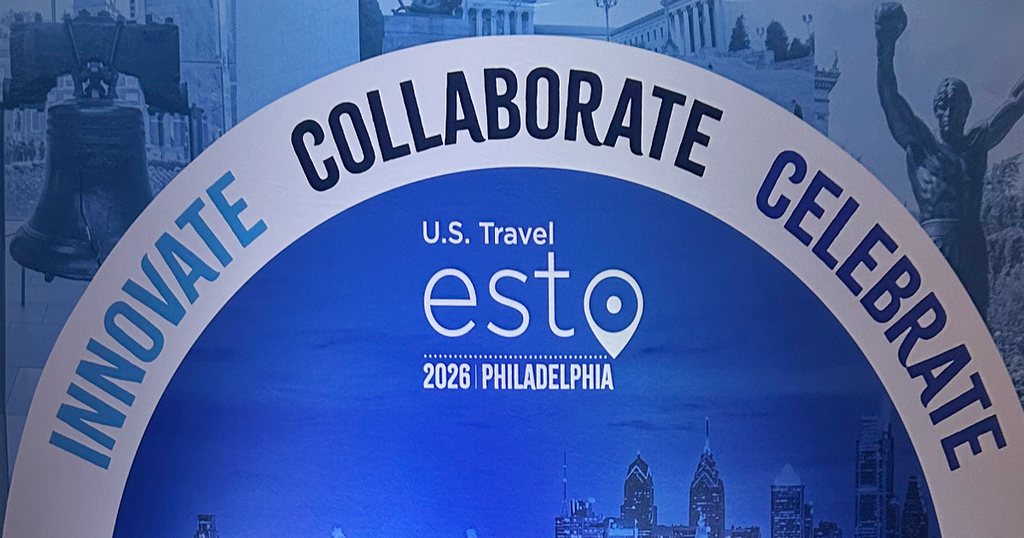
Last month, I had the pleasure of attending the U.S. Travel Association’s Educational Seminar for Tourism Organizations; ESTO for short. Attending ESTO 2026 in Philadelphia gave me a lot to think about, not just as a destination marketer, but from the perspective of someone who spends much of my time thinking about media strategy, audiences and how brands connect with people. One thing became especially clear throughout the conference: destination marketing is changing quickly, and the way we approach media needs to evolve with it. The opportunity is no longer simply to build strong media campaigns. It’s about creating more connected, insight-led strategies that reach the right audiences with the right message, in the right environment, and ultimately moving them toward action.
One of the things I enjoyed most about ESTO was the range of perspectives represented. Hearing from U.S. Travel Association leadership, destination CEOs and marketers from brands like the Philadelphia Eagles, Brooklinen and Sheetz provided me with a broader view of how marketers across industries are thinking about relevance, trust, loyalty and measurable impact. Despite the differences between categories, many of the challenges felt surprisingly similar, particularly as audiences become more fragmented and the media landscape continues to evolve.
For me, one of the biggest takeaways was the growing role of AI in travel planning. AI is quickly shifting from an emerging technology to a meaningful part of how travelers discover destinations and make decisions. Recent research shows 54% of travelers are already using AI in their travel planning, with that figure expected to reach 75% in the future. AI is changing where discovery happens, what content gets surfaced, and potentially how we define media effectiveness.
Another theme that really resonated with me was the importance of connecting the entire consumer journey. The “Disconnected Funnel” session challenged marketers to reconsider the traditional separation between awareness and conversion, and I believe that has significant implications for destination media planning.
ESTO also reinforced something I’ve increasingly seen in destination marketing: strong destination brands are built from the inside out. Neil Frauenglass from our client Visit Philadelphia spoke about the success of their Civic Pride efforts. Conversations around trust, authenticity, resident sentiment, community engagement and destination stewardship highlighted how much the DMO role has expanded. Destinations aren’t communicating only with prospective visitors. Residents, local businesses, community organizations and other stakeholders all play a role in shaping how a place is experienced and perceived.
Finally, I left ESTO thinking about curiosity, adaptability and resilience. Diana Kander’s keynote encouraged leaders to recognize the blind spots that can develop with experience, while Michelle Gielan’s closing keynote explored resilient optimism and its role in sustained performance. Our industry changes constantly, platforms evolve, measurement gets more complicated, consumer behaviors shift and new technologies emerge. Staying effective means being willing to question what has worked before, adapting when the data tells us to and keep learning along the way.
Perhaps the most valuable part of ESTO, though, happened outside the sessions. Being surrounded by people who are actively shaping the future of travel created opportunities for conversations about audience behavior, media innovation, measurement and the evolving role of agency partners.
Key takeaway: The future of destination media strategy isn’t about adding more channels or tactics. It’s about making the entire ecosystem work harder, smarter and more meaningfully together. As agency partners, our role is to bring clients sharper audience intelligence, clearer channel roles, stronger connections across the funnel, thoughtful applications of technology and measurement that ultimately connects media back to traveler behavior and business outcomes.
For more information, visit harmelin.com, or connect with us on LinkedIn or Facebook.