
Flying across the country is a non-event now. You board, you snack, you land. Nobody thinks about the air traffic control, the radar tracking, and the fuel math running underneath it.
Programmatic works the same way. It is the invisible machine under a $1.3 trillion industry, connecting brands to people in less time than it takes to blink, and almost nobody outside of our world thinks about it.
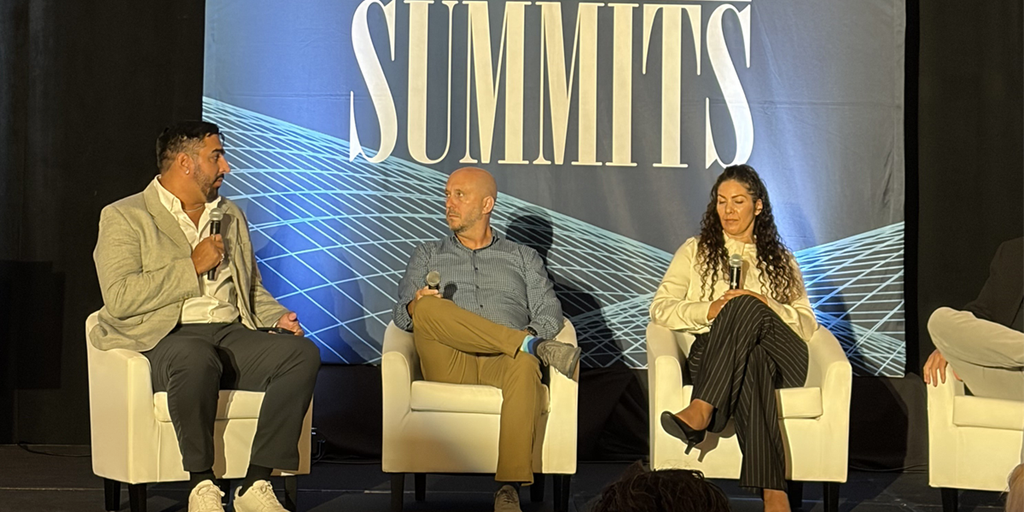
We spent last week at MediaPost’s Data & Programmatic Insider Summit in Lake Tahoe watching that machine get picked apart. Veranika moderated. Dan sat on the agentic buying panel. The through-line was hard to miss: the engine got a lot smarter this year and a lot messier.
Here are five things we brought home.
1. AI is the hammer. You are still the architect.
Agentic buying means AI making a chain of decisions in tandem toward a business outcome, without a human signing off on each step. It works. It also fails in a specific way Dan flagged on the panel, which he called context creep: one small, logical error compounds into a series of wrong turns, and the campaign optimizes beautifully toward a secondary KPI, while missing the actual business objective.
The fix is not slowing the machine down; it is keeping a human toggle at fixed points and the setup, where objectives and audience parameters get defined before anything runs; the guardrails, where QA protocols, brand safety, and budget limits live; and the smell test, where somebody looks at the output, whether that is a generated image or a full media plan, and asks whether it makes sense in the real world.
2. The best hire may have waited tables.
Mac Hagel, Head of Media at Razorfish, said he looks for candidates who have waited tables but not for the resume line but for the hustle, and the ability to find a solution on the fly when the variables refuse to hold still.
Dan agreed and pushed it a step further: hire for critical thinking and problem solving. As trafficking, tagging, and budget tracking get handed off to AI teammates, the market value of a data pusher drops fast. What’s left is the work the machine cannot do, which is challenging its assumptions, maintaining the client relationship, and orchestrating messy signals into something coherent.
3. Retail media needs to show receipts.
Retail media networks are in a gangly teenager phase, growing fast and no frontal lobe yet. Media is a high-margin business for retailers, so they are heavily incentivized to grade their own homework, and the reported numbers show it. Kristin Rohlfing, Director of Shopper Marketing at Nestlé Purina, put it plainly in her keynote: the ROAS on some of these campaigns is outrageous, especially when you are selling dog food. The margins are not that great.
So, stop asking for transparency as a value statement and start writing receipts into the plan: disclosed attribution windows, so you know whether a sale counted on a 7-day click or a 14-day view; clear SKU scope and halo rules, so you know whether the sale applies to the featured product or the whole portfolio; raw data your own models can independently test; and documented adherence to IAB and MRC measurement guidelines.
4. Measurement disagreement is a finding, not a failure.
The single source of truth is dead, and nobody in Tahoe mourned it. What replaced it is triangulation: marketing mix modeling, multi-touch attribution and incrementality testing running at the same time.
When those models disagree, that is the useful part. It shows you where the uncertainty lives and where the next round of testing should go. If they all agreed perfectly, we would worry about bias in the data rather than celebrate.
5. Brands do not have a data problem; they have a prioritization problem.
Emily Proctor of OMD made a point that stuck with us. Data you cannot tie to a specific decision is not an asset; it is a storage cost. The pivot is from observable first-party data, meaning what a customer has done, to stated zero-party data, meaning what a customer actually wants. The only way to get the second is a value exchange the customer can feel right away.
The guardrail is the creepy test. If a customer would be unsettled to learn how you got the information, you are misusing it. Trust is the metric that decides 2027.
What We Are Doing with It
Agentic buying is running in live accounts today. Hesitating to adopt it will not protect anyone’s job; it will just put you behind the people who learned it. So, the question heading into 2027 planning is not whether to use the machine; it is whether you are building the machine to serve your strategy, or letting the machine’s logic quietly start building your strategy for you.
At Harmelin Media, that means combining AI-driven automation with the strategic oversight, measurement framework, and business context required to keep programmatic investment aligned with real business outcomes.
Watch Dan’s Panel, Agentic AI in Buying: Where the Human Toggle Still Matters
For more information, visit harmelin.com, or connect with us on LinkedIn or Facebook.