Retail banks are shifting focus from account acquisition to primacy through stronger onboarding, customer retention, and insight into consumer spending.

Opening an account is only the first step. With “silent switchers” maintaining relationships across multiple banks, account openings alone are becoming a less meaningful measure of acquisition success. According to a recent Financial Brand article, the first 90 days represent a critical window for encouraging the behaviors that can move a new customer toward a primary banking relationship. This shift challenges institutions to evaluate acquisition not only by the number of accounts opened, but by how quickly new customers become active, engaged users.
Beyond Account Openings: Turning Acquisition into Lasting Growth
Nearly half of new checking customers maintain another checking account at a different financial institution, according to 2026 J.D. Power research cited by Financial Brand. During the first 90 days, behaviors such as direct deposit, bill pay, and debit card usage are stronger indicators that a new customer is developing a primary relationship.
This opportunity extends beyond media scale or promotional spending and may be especially valuable for community and regional banks. Smaller institutions can be more deliberate and personal during onboarding, differentiating their experience through localized communication and consistent follow-up across the first 90 days. Connecting acquisition to the broader customer journey remains important. Media key performance indicators (KPIs) should continue to measure campaign performance. However, collaboration across media, marketing, and customer teams can provide insights that refine audiences, messaging, and investment toward acquiring customers who are more likely to engage beyond the initial offer.
From a media perspective, this means acquisition campaigns should not operate in isolation from onboarding and customer engagement. Messaging can set expectations for the relationship before conversion, while audience and performance insights can help identify which offers, behaviors, and customer segments are most associated with deeper engagement. Even when media performance is measured against campaign KPIs, sharing post-acquisition signals can improve future strategy.
Even after a bank becomes a customer’s primary institution, that position is never permanent and must be continually re-earned. Online banks such as Ally are expanding beyond savings with checking and daily rewards to compete directly for the everyday relationship, while McKinsey research highlights the outsized value of being a customer’s “anchor” bank and how often customers shift business between banks. For regional banks, the question is which relationship advantages they can own to keep existing customers without matching the scale of a national digital bank.
Defending Primacy: Keeping Customers as Digital Banks Compete
With Millennials and Generation Z representing approximately 70% of its customer base, Ally Bank is using everyday interest rewards, no minimum balance requirements, and a simplified points system to strengthen relationships with younger consumers. The Financial Brand’s recent article, highlighting Ally Bank, reports that younger customers maintain as many as six or seven banking relationships, showing how difficult it has become for any one institution to earn primary status.
Once earned, that status still has to be defended. McKinsey’s 2026 Corporate and Investment Banking Voice of the Customer Survey found that clients reallocate 12% to 25% of their banking wallet share each year, while primary “anchor” banks capture up to three times more wallet share than secondary providers. Although the study looked at large business clients, everyday customers behave in much the same way: when choosing which bank to keep most of their money with, they look at trust, dependable service, and a strong relationship.
Regional institutions do not need to replicate Ally’s program to compete. Instead of trying to win on rates or rewards alone, they can give existing customers reasons to stay, such as relationship-based benefits that reward customers for bringing more of their banking to one place, alongside the local relationships, community engagement, and personal service national digital banks find harder to match.
Sources:
- https://thefinancialbrand.com/news/deposits/how-ally-aims-to-push-its-primacy-appeal-with-checking-and-a-new-rewards-program-199966
- https://www.mckinsey.com/industries/financial-services/our-insights/anchor-or-drift-what-it-takes-to-capture-wallet-share-in-2026

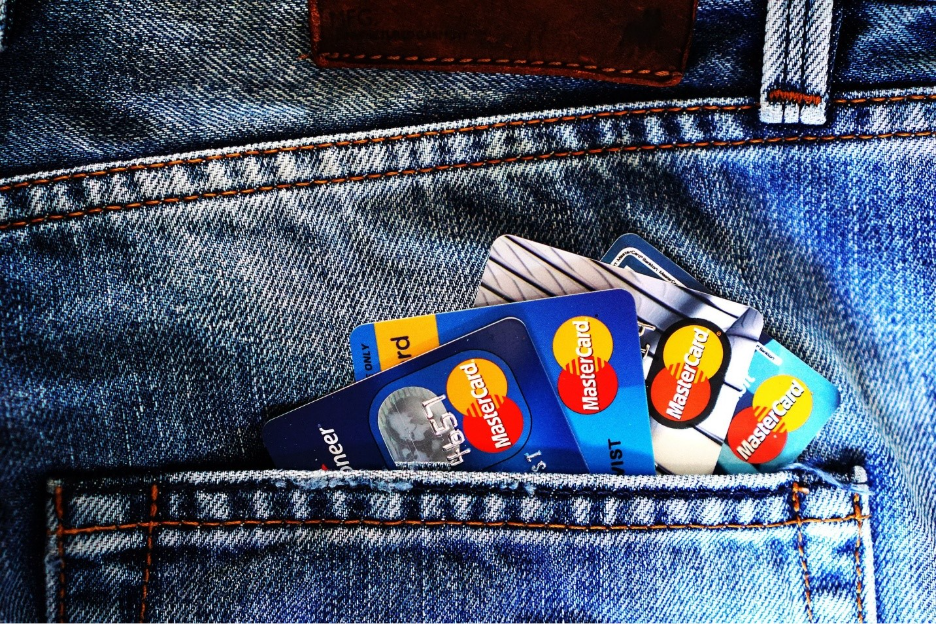
Consumers continue to demonstrate spending resilience even as necessities become more expensive, according to a recent Bank of America Institute study. At the same time, EMARKETER research shows that incoming credit card prospects weigh security, payment flexibility, and rewards when choosing which card to use, while leading issuers still leave many of these needs unmet. Together, these trends suggest that financial pressure is shaping how consumers pay and prioritize rather than producing a uniform pullback.
Spending Resilience: Consumers Continue to Defy Pullback Expectations
Consumers are actively spending across categories, not only necessities. Bank of America Institute found that nearly 86% of more discretionary retail categories saw positive spending growth, with total debit and credit spending per household increasing 6.2% year over year in September 2026. Additionally, retail spending excluding gasoline increased 3.5% year over year, while services spending grew 5.4%.
As spending continues, card features can influence which card consumers reach for first. EMARKETER’s 2026 US Cash-Back Credit Card Emerging Features Benchmark found that security and control was the most-valued feature category for the fifth consecutive year, led by alerts when a Social Security number is found online (54%). However, the 10 leading cash-back programs averaged only about 22 out of 100 points for offering the features consumers value, with the top program scoring 29. Redeeming rewards is the exception: it was the most-supported category in the study, with seven of the ten programs offering reward redemptions directly on the merchant’s checkout site which 23% of prospects called “extremely valuable.” Younger consumers also signaled interest in flexibility and rewards, with 32% of Gen Z and 30% of Millennials calling the option to skip one payment annually “extremely valuable.”
These gaps give regional banks room to compete without matching national issuers feature for feature. Institutions can use national signals as a starting point, then evaluate whether similar behaviors are occurring within their local footprints. They can position themselves as resources that help customers manage financial decisions through security reassurance, flexible payment options, and rewards that grow with the relationship.
From a marketing perspective, resilient spending supports a more nuanced approach than broadly reducing investment in response to economic uncertainty. Banks can monitor product demand, audience response, and local market conditions to decide where to emphasize convenience, security, rewards, or credit access. Leading with the features consumers value most, rather than a generic rewards message, can help card campaigns stand out while maintaining visibility with customers whose needs continue to evolve.
Sources:
- https://institute.bankofamerica.com/content/dam/economic-insights/consumer-checkpoint-october-2026.pdf
- https://content-na1.emarketer.com/us-cash-back-credit-card-emerging-features-benchmark-2026
For more information, visit harmelin.com, or connect with us on LinkedIn or Facebook.