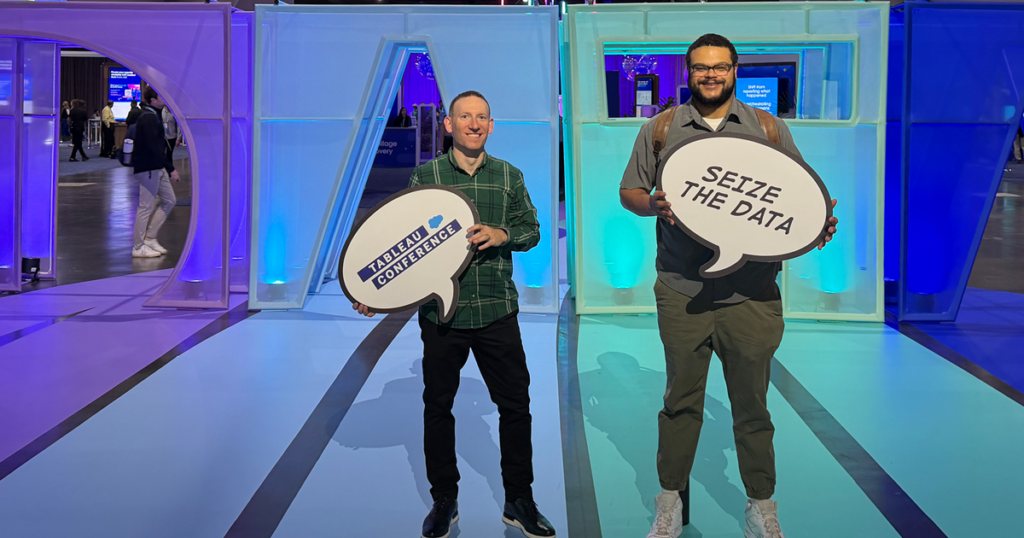
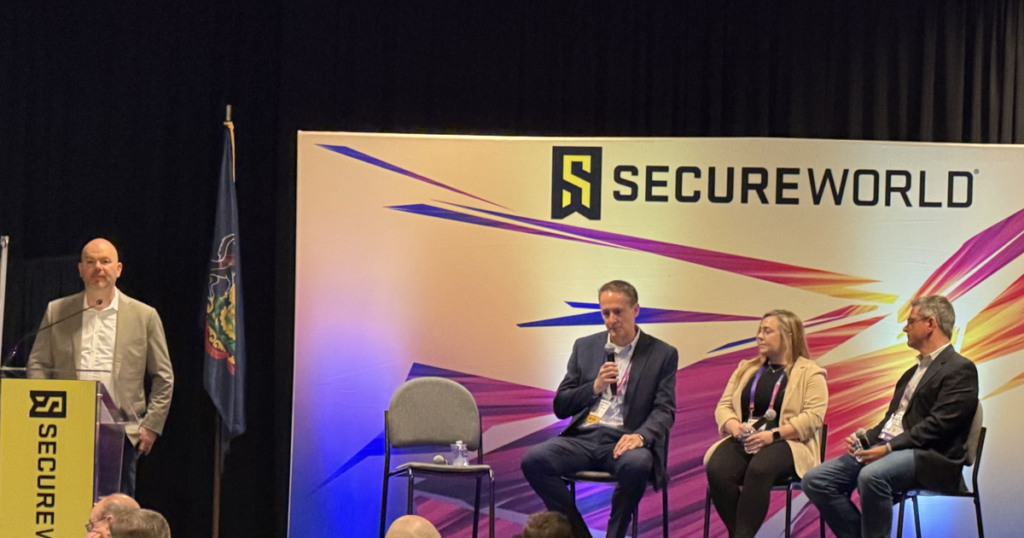
In our annual Media Channel Trends presentation, we dove into hot topics and insights across key channels including video, search, social and more. The session explores how artificial intelligence, personalization and platform fluidity are reshaping media strategy—offering insights to guide your planning in 2026 and beyond.
Media Magnified
Breast Cancer Awareness Month: A Reminder to Show Up for Our Health

While October is special for many reasons: Halloween, Diwali, Oktoberfest, Fall festivities, Red October (Go Phillies!), October is also breast cancer awareness month. Breast cancer is the most common cancer in Women in the U.S., accounting for 1 in 8 women. While it has long been associated with older women, more young women are being diagnosed today, often with aggressive tumors requiring complex treatment. Being proactive about your health is essential, so how can we prevent ourselves from being the next number? How can we take care of ourselves, and the women around us, to live long and healthy lives?
1. Regular checkups are no longer a suggestion, but a requirement.
Early. Detection. Saves. Lives. Yearly mammograms, conversations with your doctor, and consistent screenings can help catch something before it grows. However, young women are more likely to skip checkups compared to older women, making it even more important to remind each other how critical these appointments are.
2. Taking care of yourself doesn’t just mean going to the doctor.
Alcohol, processed foods, tobacco, unhealthy exercise habits, are just a few of the things that can increase your risk of breast cancer. Staying active, eating fruits, vegetables and whole foods, and limiting alcohol intake are also just a few ways to take care of yourself. As busy women, it’s easy to put ourselves last while caring for everyone else, but prioritizing your own health is the best gift you can give to yourself and those who love you.
3. Know your family history!
Unfortunately, breast cancer can be genetic, so understanding your family’s medical history, along with any genetic counseling and testing can help catch something early, or before it even begins.
While we need to be prioritizing ourselves, awareness isn’t only about our own health. How can we show up for the women in our lives to support them as well?
1. Support systems matter.
Breast cancer is not just an individual journey. It ripples out to families, workplaces, and entire communities. Creating environments where women feel supported in prioritizing their health is critical. That means encouraging women around you to book their annual appointments and sharing resources within your networks. The role of awareness, communication, and advocacy can literally save lives.
2. Use your voice.
Awareness months like this one will only make a difference if we speak up. Each of us has the chance to spread these reminders. Whether it’s sharing helpful resources, listening to and uplifting survivor stories, or simply encouraging the women in our lives to schedule that checkup, your voice has power.
Breast cancer awareness isn’t just about pink ribbons in October. It’s about cultivating a culture of health, prevention, and support year-round. Together, as colleagues, friends, and families, we can move from awareness to action. So, this month, let’s do more than wear pink. Let’s encourage, remind, and uplift one another. Behind every statistic is a life, a story, and a future worth protecting.
For more information, visit harmelin.com, or connect with us on LinkedIn or Facebook.
Navigating the Next Wave: A Strategic Overview of the MediaPost Planning & Buying Summit

Finding Meaning in a Saturated Market
The MediaPost Planning & Buying Insider Summit opened with a fitting metaphor: Nashville’s neon-lit strip, where dozens of bands battle for the same passerby’s attention, feels like today’s media marketplace, with endless placements across feeds, shows, and screens (even smart fridges) competing for a finite resource — attention. In this environment, the mandate has shifted from “buy more” to “mean more.” This recap distills the Summit’s most actionable themes: AI’s immediate impact on planning and discovery, the measurement frameworks required to prove value, and the strategic choices that help brands grow amid oversupply and rising noise.
AI in Planning: From Automation to “Vibe”
The conversation on AI in planning centered on the balance between automation and human oversight, where I introduced the concept of “Vibe Planning.” Building on the idea of Vibe Coding, this approach imagines more natural language prompts generating sophisticated audience strategies, something Harmelin has already begun testing with our internal Programmatic buying team. As AI capabilities accelerate, the opportunity is clear: planners can move beyond tactical efficiencies to shaping richer, more intuitive audience frameworks. But with that opportunity comes responsibility, and the role of the planner becomes not less, but more essential. AI’s acceleration elevates the human role:
- Garbage in, garbage out. Outcomes depend on clear objectives, clean data, and market context provided by planners.
- Guardrails matter. Teams must define brand-safe constraints without over-constraining models and stifling discovery.
- Critical thinking is core. The modern planner interrogates AI outputs, understands data lineage, and connects recommendations to commercial outcomes.
The new search frontier. With consumer queries moving to generative chat, the discipline is shifting from SEO to Answer Engine Optimization (AEO), ensuring brands are accurately represented inside AI answers. One apparel case study showed how an AI audit surfaced a blind spot: appearing only as a men’s brand in answers, missing a newly launched women’s line. AEO turns such insights into immediate corrections in positioning and content.
The Measurement Mandate: Proof Across a Fragmented Ecosystem
Speed without proof doesn’t scale. The state of the art is multimodal planning, combining:
- MMM for top-down channel contribution;
- Incrementality testing (e.g., geo-tests) for causal lift; and
- Attribution for bottom-up, rapid readouts.
Regeneron’s “measurement trifecta” links granular patient-level indicators to lagging outcomes like sales, aligning fast optimization with executive-level validation.
Bridge digital to physical. Most purchases remain offline. Deterministic location data (observed store visits) connects digital impressions to real-world outcomes and avoids the uncertainty of modeled signals.
The RMN conundrum. Retail Media Networks promise unmatched proximity to purchase but suffer from fragmentation and inconsistent standards. With 200+ RMNs, marketers face:
- Operational drag consolidating results across disparate platforms,
- Apples-to-oranges measurement as vendors grade their own homework, and
- Brand-safety risk from opaque off-site buys and MFA inventory.
The takeaway: insist on transparent reporting, clean-room collaboration, and incrementality/MMM to validate true lift.
Strategy for an Oversupplied Market
Challenger focus and emotional resonance. Mitsubishi’s Outlander launch prioritized psychographics over demographics targeting “momentum makers” and audiophiles, then partnering with Black Violin to spotlight an exclusive Yamaha sound system. The product truth became a cultural story, converting niche passion into outsized attention.
Disciplined brand building. Rhone’s “stairstep” media mix methodically shifts spend from lower-funnel to upper-funnel over time, building salience without sacrificing performance efficiency. The result: sustainable growth rooted in awareness, not just last-click wins.
Brace for the 2026 political surge. A projected $10B+ midterm flood will spike CPMs (often 60–70% week-to-week in hot markets), amplify consumer fatigue, and even influence spending behaviors. Brands should pre-plan flighting, creative rotations, channel diversification, and measurement baselines now.
Conclusion — From Algorithms to Meaning
The Summit’s signal amid the noise: AI is here, but the advantage belongs to humans who guide it. Planners who set the right objectives, enforce smart guardrails, and demand multimodal proof will convert computational speed into commercial impact. In a saturated market, growth favors brands that pair disciplined measurement with emotionally resonant stories and proactive planning for external shocks. The endgame isn’t the cleverest model; it’s the team that turns AI-enabled scale into meaningful consumer connection.
For more information, visit harmelin.com, or connect with us on LinkedIn or Facebook.
September 2025 QSR Update: Chicken, Coffee & Mexican Chains Drive Growth

Newsletter Overview: In 2025, U.S. Quick Service Restaurants (QSRs) are facing uneven traffic and shifting consumer habits. To stay competitive, brands are leaning into high-growth segments like chicken, coffee, and Mexican concepts; scaling with innovative operations and technology; adapting to convenience-driven dayparts; and using bold, personality-driven marketing campaigns such as Zaxby’s “Sauce Boss.”

While overall traffic is down—especially at burger and sandwich chains—chicken, coffee, and Mexican QSRs have posted growth in early 2025. Still, visits per location declined across nearly every category, suggesting expansion may be outpacing demand. The lesson: operators should double down on menu innovation, loyalty programs, and measured site growth to build resilience and position themselves for stronger returns once customer confidence rebounds.
Chicken, Coffee, and Mexican QSRs Thrive
The first half of 2025 has underscored how uneven consumer demand is across the quick-service landscape. While burger and sandwich chains are losing ground, chicken concepts, coffee shops, and Mexican-inspired brands are holding their own, with modest but notable visit growth.
• Chicken QSRs had ~1.3% year-over-year visit growth in H1 2025.
• Coffee shops grew ~2.8%.
• Mexican-inspired QSRs also saw growth (~1.9%) in visits.
These segments highlight what today’s customers still prioritize: affordable indulgence, bold flavors, and functional routines like daily coffee. For operators, the takeaway is clear: leaning into categories and menu items that deliver comfort, convenience, and value can help mitigate broader traffic softness.
At the same time, the data signals a warning. Visits per location are falling, meaning expansion is moving faster than consumer demand. QSRs that chase growth without sharpening unit economics or innovating around loyalty risk spreading themselves too thin. The winning play is a disciplined one — measured real estate growth paired with menu creativity, strong digital engagement, and differentiated value platforms. Brands that invest in customer stickiness now will not only weather the current slowdown but also be poised to capture outsized share when traffic rebounds.

Many U.S. restaurant chains are growing well ahead of the industry average (~4% in 2025), driven by aggressive unit expansion, tech adoption, and strong consumer demand for value, convenience, and novel dining formats. Brands like Dave’s Hot Chicken, CAVA, Jersey Mike’s, Slim Chickens, and others are scaling rapidly by opening many new locations, revamping menus, improving operations, and expanding into new markets. Their growth strategies offer insights into what kinds of restaurant models are resonating most with diners in the current environment.
The Fastest-Growing QSR Chains—and the Risks of Rapid Expansion
The U.S. restaurant sector is seeing a noticeable divergence: while the average growth across all chains is modest (~4%), the fastest-growing ones are pulling well ahead. Chains such as Dave’s Hot Chicken (with plans for 80 new openings in 2025 and many more in the pipeline), Jersey Mike’s, CAVA, Slim Chickens, and others are achieving strong sales, rapid network expansion, and growing brand awareness. These are not just incremental advances; many chains are scaling both in the number of outlets and in market reach (new states, non-traditional venues, etc.).
A key differentiator is how these chains are combining aggressive expansion with operational innovation. Several of them are investing in technology (apps, digital ordering, connected kitchens), refining their franchise models, enhancing off-premises capabilities (drive-thru, delivery, carryout), and experimenting with flexible store formats. These moves help them deliver faster service, keep costs manageable, and remain relevant as consumer expectations evolve.
However, growth comes with its own risks. Scaling too fast without supporting infrastructure, consistent customer experience, or careful site selection can lead to dilutions in quality or margin pressure. In addition, as more chains compete using similar value and convenience levers, differentiation — in menu, brand, and experience — becomes important. For brands eyeing expansion, balancing speed with sustainable growth — through franchise strength, employee culture, tech investment, and maintaining brand promise — will likely separate winners from the rest.
Source: https://oysterlink.com/spotlight/fastest-growing-restaurant-chains-us/
Traditional mealtimes are blurring in the U.S., with convenience and indulgence driving foodservice decisions across dayparts. Off-premises dining and snacking dominate, while younger consumers demand personalization and flexible formats. Operators who pair speed with emotional value, making dining both easy and special, will stay most relevant.
Convenience, Indulgence Reshape Dining Dayparts
U.S. dining habits are shifting away from rigid meal structures, with consumers increasingly treating foodservice as an on-demand solution for convenience and indulgence. Breakfast and lunch remain routine-driven, but snacking has become a legitimate meal replacement for men, with four in ten diners saying snacks can form a satisfying meal. This fluid approach, especially among Gen Z and Millennials, creates opportunities for operators to innovate with portable, customizable, and mix-and-match offerings that fit into flexible lifestyles.
Off-premises channels continue to dominate, but pick-up has emerged as the most practical choice. Consumers prefer it over delivery and drive-thru due to cost and accessibility, reinforcing the need for restaurants to optimize mobile ordering, loyalty programs, and packaging that elevates the experience. Meanwhile, dayparts are increasingly shaped by mindset: mornings are about routine and affordability, afternoons about refreshment and productivity, and evenings about indulgence and reward. Aligning offers with these shifting motivations is key to driving frequency across the day.
For operators, the imperative is to combine speed and accessibility with an element of emotional value. Streamlined menus, tech-enabled personalization, and impulse-friendly snacks can capture sales throughout the day, but the experience still needs to feel special. As consumer expectations rise and mealtimes blur further, brands that balance practicality with indulgence — through innovation, loyalty incentives, and disciplined growth — will be best positioned to win consistent visits across multiple occasions.
Source: https://store.mintel.com/report/us-dining-out-dayparts-market-report

Zaxby’s “Sauce Boss” campaign introduces Omar Epps as a charismatic new character, blending style and humor to highlight the brand’s signature sauces.
Zaxby’s “Sauce Boss” Campaign Shines
Zaxby’s latest marketing initiative, featuring actor Omar Epps as the “Sauce Boss,” marks a significant departure from traditional fast-food advertising. The campaign showcases a stylish, confident character who embodies the brand’s commitment to flavor and flair. Epps’ portrayal adds a touch of sophistication and humor, setting the campaign apart in the competitive QSR industry.
The “Sauce Boss” character is not just a spokesperson but a cultural icon in the making. His presence in the campaign elevates Zaxby’s image, aligning the brand with contemporary trends and appealing to a younger, trend-conscious audience. The use of a well-known actor like Epps adds credibility and draws attention, making the campaign more memorable and engaging.
This strategic move reflects Zaxby’s understanding of the evolving marketing landscape, where authenticity, style, and personality resonate more with consumers than traditional advertising methods. By integrating a charismatic character into their branding, Zaxby’s not only promotes their products but also crafts a narrative that consumers can connect with, ensuring the campaign’s success in a crowded market.
Source: https://www.qsrmagazine.com/story/qsr-ad-of-the-month-zaxbys-sauce-boss-has-star-quality/
FAQ
Traffic across U.S. QSRs is uneven. Burger and sandwich chains are soft, while chicken, coffee, and Mexican concepts show modest visit growth. Visits per location are declining, signaling expansion may be outpacing demand.
Chicken, coffee, and Mexican-inspired QSRs are seeing year-over-year visit gains, bucking declines seen at many burger and sandwich chains.
Prioritize menu innovation, strengthen loyalty programs, pace real estate expansion, and invest in digital ordering, operations tech, and daypart-specific value to improve stickiness and unit economics.
Growing too fast can strain operations, hurt consistency, and pressure margins if site selection, staffing, and infrastructure lag behind expansion.
Personality-driven, style-forward campaigns help brands stand out, reinforce flavor and value platforms, and connect with younger audiences seeking authentic, memorable experiences.
For more information, visit harmelin.com, or connect with us on LinkedIn or Facebook.
Q3 2025 Education Trends: AI, Immersive Tech & Skills Learning

Education trends continue to focus on AI-powered personalization and automation, immersive and hybrid technologies, and evolving learning models including microlearning and skills-based education.

Virtual and augmented reality are poised to become mainstream, enabling immersive learning including virtual field trips, simulations, and interactive environments. This enhances engagement, especially in STEM and technical subjects.
Immersive Technologies (VR/AR/Metaverse)
Forbes paints a compelling picture of how education is undergoing a seismic shift, driven by technological innovation and the demands of a rapidly changing workforce. Traditional models of education, where learning is front-loaded in youth, are being replaced by lifelong, adaptive learning ecosystems. Technologies like AI, AR/VR, and even neurotechnology, are not just enhancing how we learn; they’re redefining what learning looks like. Immersive virtual environments and AI-driven personalization promise to democratize access and tailor education to individual needs, while also raising important questions about equity, privacy, and the evolving role of human educators.
One of the most exciting and controversial developments is the potential for brain-computer interfaces to accelerate learning. While still in early stages, these technologies could revolutionize how we acquire knowledge and skills, especially for learners with disabilities. As with any powerful tool though, ethical considerations must be front and center. Who controls the data? How do we ensure these tools are used to empower rather than exploit? The promise of optimized learning is tantalizing, but it must be balanced with a commitment to human dignity and oversight.
Looking ahead, the most profound shift may not be technological, but cultural. The normalization of continuous education, through micro-learning, modular programs, and employer-sponsored upskilling, signals a future where learning is no longer confined to classrooms or age brackets. This shift demands a rethinking of how we measure success, how we credential knowledge, and how we support learners across their entire lifespan. The challenge for educators and policymakers is not just to adopt new tools, but to cultivate a mindset of curiosity, adaptability, and resilience. The future of education isn’t only about what we learn, it’s about how we stay ready to learn again and again.

The move away from traditional degree models continues, with accelerated programs, microcredentials, and microlearning gaining ground, offering greater flexibility and direct alignment with industry needs.
Hybrid, Micro, and Skills-Based Learning
Higher education is undergoing a transformative shift, driven by technological innovation and changing student expectations. The integration of AI and automation is streamlining both learning and administrative processes, allowing institutions to personalize education while improving operational efficiency. EdTech continues to expand, with hybrid and fully digital learning environments becoming the norm. These tools not only enhance accessibility; they also redefine the classroom experience, making education more interactive and inclusive. As universities embrace these technologies, they must also invest in digital infrastructure and faculty training to ensure meaningful implementation.
The rise of non-traditional programs and accelerated degree pathways reflects a growing demand for flexibility and affordability. Students are increasingly seeking alternatives to the traditional four-year model, opting for certificate programs, vocational training, and “degree in three” options that align more closely with career goals and financial realities. This shift is also a response to evolving workforce demands, where interdisciplinary skills and adaptability are more valuable than ever. Universities are responding by offering programs that blend technical expertise with business and communication skills, preparing graduates for a dynamic job market.
In our view, the most exciting trend is the increase of global collaboration through remote learning. This not only democratizes access to education but also fosters cross-cultural exchange and innovation. However, institutions must be cautious not to lose sight of the human element — mentorship, community, and emotional support remain critical to student success. As we move into the 2025/2026 academic year, the challenge for higher education will be to balance technological advancement with human-centered design, ensuring that students are not just prepared for the future of work, but also equipped to thrive in a globally connected world.
Source: https://hepinc.com/newsroom/6-trends-were-seeing-in-higher-education/

Online platforms are enabling cross-border collaboration, global classrooms, and lifelong learning. Blockchain-based credentials and microlearning are helping surmount access barriers.
Global Accessibility & Lifelong Learning
Online education in 2026 is no longer a secondary option; it’s a dynamic, tech-driven ecosystem reshaping how we learn, teach, and credential knowledge. AI-powered personalized learning is at the forefront, enabling platforms to tailor content in real time, provide instant feedback, and support learners with 24/7 tutoring. This shift not only enhances student outcomes, but also redefines the educator’s role, allowing instructors to focus on mentorship and emotional support. Meanwhile, AR and VR technologies are making learning more experiential, bridging the gap between theory and practice in fields like medicine, business, and history.
Microlearning and blockchain credentials are also transforming the structure and credibility of online education. Bite-sized content formats cater to modern attention spans and busy lifestyles, while blockchain ensures secure, verifiable records of achievement, critical in a global, modular learning environment. Learning analytics further empowers institutions to intervene early and optimize course design, while real-time translation and cross-border collaboration are making classrooms truly global. These innovations are not simply technological upgrades; they represent a fundamental shift in how education is accessed, delivered, and valued.
The most profound change is the redefinition of the educator’s role, from lecturer to coach. As content delivery becomes increasingly automated, the human element of education, guidance, empathy, and personalized support, becomes even more vital. This shift demands new training models for educators and a renewed focus on soft skills, which are now embedded into curricula to meet evolving workforce demands. The challenge ahead is ensuring that technology enhances, not replaces, the human connection at the heart of learning. Institutions that strike this balance will lead the way in shaping a more inclusive, flexible, and future-ready education landscape.
Source: https://www.ssbm.ch/top-trends-in-online-education-for-2026-ai-ar-and-beyond/
For more information, visit harmelin.com, or connect with us on LinkedIn or Facebook.
Q3 2025 Healthcare Trends: Healthcare Ads Hit the Sweet Spot, Future Proofing Healthcare, & Why Consumers Distrust Healthcare Information

From ad strategies and regulatory shifts to looming legislation and eroding trust, the healthcare industry is facing a pivotal moment but are organizations ready to respond?

When Healthcare Ads Hit the Sweet Spot and When They Get Too Personal
Serving the right message to the right audience is always a goal for marketers but in healthcare, personalization can go too far. According to Emarketer and StackAdapt’s “Healthcare Advertising Effectiveness Survey” in January 2025, healthcare ads are moving consumers to take action while also raising privacy red flags.
In a breakdown of consumer responses to healthcare advertisements we see: 34% of consumers researched information online after seeing a healthcare ad, 24% discussed the ad with a healthcare professional or insurer, 20% consulted family or friends, 16% clicked on the ad, and 13% ultimately purchased the product or service. These insights highlight the importance of informative and trustworthy advertising in influencing consumer behavior.
However, privacy concerns persist with 52% of consumers saying that they feel that personalized healthcare ads intrude on privacy. 64% are concerned about how their healthcare data is used by advertisers, with only 10% feeling comfortable with how their information is being used.
Consumers engage with personalized ads, but the research shows there is a limit, and we as marketers can go too far. The best way forward is to use technology to target efficiently while being clear with consumers about why they were targeted.


Future Proofing Healthcare: The Merger Movement Ahead
The Trump administration revoked a Biden-era Executive Order on competition in August. The order was intended to boost competition and break up monopolies across all sectors. The reversal demonstrates the differences the two administrations have on government regulation policy.
This move signals eased regulatory oversight at the federal level, more streamlined merger reviews, and increased opportunity for hospital system growth through mergers. This also indicates that mergers will be evaluated on a case-by-case basis rather broadly opposing transactions.
States continue to have input in approving mergers. Attorneys General are taking a more active role as federal oversight decreases. Healthcare companies should consider the state’s approach and history relative to mergers.
Source: https://www.modernhealthcare.com/providers/mh-trump-executive-order-anti-competition-ftc

What Does the OBBBA Mean for Your Business?
The One Big Beautiful Bill Act (OBBBA), signed into law on July 4, 2025, brings major changes to the healthcare landscape, impacting Medicaid, Medicare, and the Affordable Care Act (ACA). This far-reaching legislation will touch consumers and impact all healthcare sectors. Hospitals, Insurers, and consumers are all trying to understand the implications.
The Act aims to reduce federal healthcare spending and increase oversight of Medicaid and ACA programs, with provisions like work requirements for Medicaid recipients, stricter eligibility checks, and changes to ACA premium tax credits. These changes are projected to reduce federal spending by over $1 trillion over a decade but also lead to 10.9 million losing coverage and create challenges for healthcare systems and payers alike.
Impact on hospitals:
More uninsured Americans will mean a surge in uncompensated care for all hospitals.
Delayed care will put strain on Emergency Departments as patients arrive sicker.
Regulatory/compliance changes will present an administrative burden for hospital staff. Rural and critical access hospitals — already under financial stress — face an even steeper cliff as payments remain flat despite rising need. Children’s hospitals rely heavily on Medicaid funding, as it provides coverage for a significant portion of their patients.
Impact on insurers:
Insurers will feel the $910 billion in reimbursement reductions from federal programs.
ACA subsidies will expire, pushing younger, healthier members out of the market, increasing adverse selection and medical loss ratios, and raising commercial insurance rates. Higher churn rates due to work requirements and eligibility re-verifications will add to administrative burden.
Impact on consumers:
Millions of Americans face simultaneous loss of insurance and social supports and most notably coverage through Medicaid and nutrition through SNAP. Community health centers and local public health infrastructure may be especially affected, leading to gaps in maternal health, behavioral health, and immunization programs. These disruptions will disproportionately impact low-income and rural populations. Young adults aged 19–29 are expected to face the largest loss of insurance. Finally, the public will suffer confusion while adapting to several changing conditions at once.
What are healthcare organizations doing to prepare now?
Hospitals have adopted AI to streamline workflow, repetitive tasks, records, etc. It cannot stop there. Hospitals are continuing to seek AI-powered efficiencies across documentation, staffing, procurement, claims processing, and more.
- Manage operational costs through Group Purchasing Organizations, rethinking supply chains and procurement strategies to reduce costs.
- Work with local health departments to reduce duplicative services.
- Where relevant, apply for the Rural Health Transformation Program funding.
Insurers can prepare for new documentation requirements by training staff and upgrading systems now. Adopt AI solutions to track eligibility, detect fraud, and target members for retention.

As the Trust Gap Grows, Why Do Consumers Distrust Healthcare Information?
The COVID era damaged consumer trust in healthcare information, no matter the source. No entity in our industry is spared, according to the Emarketer’s “Consumer Distrust in Healthcare 2025” report.

Of those surveyed:
- 66% blame insurers,
- 60% blame pharmaceutical companies and costs,
- 42% blame politicians,
- 34% cite fraud, waste, and abuse, and
- 23% blame healthcare providers.
COVID was a catalyst for this shift in sentiment. Over half of U.S. adults feel that public health officials misled them about COVID-19 vaccines and masking. Political partisanship plays a role here as well. We see that you are more likely to trust government health guidance when your political party is in power.
Big Pharma is blamed by 60% of those surveyed for the problems with U.S. healthcare. 78% answer that they are primarily focused on profits over helping patients. The argument that R&D is what drives costs does not seem to be landing with the American public.
Trust in hospitals has fallen since the pandemic. In 2021, 77% believed that providers were more motivated to deliver high quality care than to make profits. In 2025, that number is down to 31%, according to a Jarrad survey.
Americans seem to feel that insurers’ coverage delays and denials are a major problem, with 29% having this experience themselves. Only 28% surveyed by Gallup report that their coverage is good or excellent, a 16-year survey low.
This erosion of trust is leading to younger adults taking medical advice from unexpected sources like friends, family, and social media. Research shows that 54% end up regretting a health choice made based on unreliable information. We can speculate that this will also lead to lower immunizations and the inevitable problems that will result.
What can the industry do to win back trust?
- Hospitals can use local trusted authorities to engage with neighborhood-level social groups and local, trusted media. Engage in social media to reach younger people with reliable information and respond to comments.
- Insurers and pharmaceutical companies can own previous missteps by addressing transparent explanations for controversial decisions.
- Show the public what is behind medical advice to build trust in your research-backed recommendations.
Source: https://content-na1.emarketer.com/consumer-distrust-healthcare-2025#page-charts
For more information, visit harmelin.com, or connect with us on LinkedIn or Facebook.