
This webinar is a forward-looking session on the shifts reshaping how consumers discover, engage, and buy. You will walk away with a clear read on where media is heading, essential planning considerations, and the opportunities to seize first.
Media Magnified
Q3 2026 Travel & Tourism Trends: Travel Demand Holds as Costs, Loyalty, and AI Reshape Planning
Travel demand is strong; however, costs, loyalty, and AI are changing how travelers choose and reshaping how brands compete.

Traveler demand remains resilient as consumers remain eager to travel, even as economic uncertainty influences how they budget and book.
Demand Keeps Moving
Travelers are still making room for trips in their budgets. Future Partners reported that nearly 88% of American travelers showed strong excitement for leisure travel in the next 12 months. The same research found that the average American traveler plans to take 3.8 leisure trips in the next year, up from 3.6 in the prior month. This creates a stronger planning environment for destinations, hotels, attractions, and travel brands.
It does not mean consumers are unconcerned about the economy; it means travel continues to hold emotional value, even when households are watching discretionary spending. For smaller advertisers, that makes timing and message discipline especially important. Brands should avoid solely running broad awareness campaigns and begin to focus on value, ease, and clear reasons to choose now.
Travel Weekly reported that last minute bookings are still prevalent in 2026, with some travelers requesting trips less than a month before departure. That pattern changes how advertisers should think about timing. Demand can appear far out, then convert quickly when consumers finally commit. Brands that keep always-on lower-funnel media, updated inventory messaging, and flexible creative are better positioned to capture these late decisions.
Sources:
- Future Partners, The State of the American Traveler in July 2026
- Travel Weekly, Advisors Continue To Get Lots Of Close-In Bookings
Costs still shape the trip. Price pressure remains the clearest barrier to incremental travel, even as overall intent improves.
Value Needs Proof
High costs remain a meaningful drag on travel behavior. Future Partners found that 37% of travelers said travel is expensive right now. Among other reasons, 32% cited gasoline prices, 31% cited personal finances, and 28% said the increase in airfare is why they didn’t travel more than preferred.
Research also found that 28% postponed an upcoming trip due to rising costs, while 16% canceled a trip. For tourism advertisers, this points to a more practical role for media, which can include promoting bundled offers, off-peak pricing, shorter itineraries, road-trip routes, or transparent total cost messaging. Media should help reduce uncertainty, particularly during times when economic changes are affecting everyone.
There are brands that could have an advantage here if they’re able to be more nimble than other advertisers. Regional destinations, independent hotels, and attractions can quickly shift their creative to highlight affordability, convenient parking, local deals, or family-friendly value. The ability to respond quickly to changing consumer needs can help stay relevant and capture demand as priorities shift.
Source: Future Partners, The State of the American Traveler in July 2026
Loyalty is earned over time. While travel participation is steady, brand attachment remains fragile across airlines and hotels.
Experience Beats Points
Provoke Insights found that nearly one in five Americans purchased airline tickets in the past month, while 20% booked a hotel stay. This demand does not, however, translate into brand loyalty as airlines scored 0% on the Brand Loyalty Index, while hotels scored -7%. This suggests that consumers remain willing to travel but may be less committed to sticking with the same brands.
Quality is the strongest loyalty driver, cited by 53% of airline purchasers and 58% of hotel stay purchasers. This should shift how travel brands approach and think about retention. While rewards programs still matter, they do not offset or compensate for a poor trip experience. Provoke reported that 27% of airline purchasers and 25% of hotel stay purchasers would abandon a brand following a bad personal experience.
For smaller clients, loyalty strategies should focus less on competing with points systems and more on delivering memorable service, responsive communication, and stress-free planning. Smaller brands may not be able to match the scale of major loyalty programs, but they can differentiate through the experience they provide at each stage of the customer journey. This can turn a one-time visitor into a repeat — or over time, loyal — customer, giving brands a meaningful way to compete beyond price.
Source: Provoke Insights, Travel Brand Loyalty: 2026 Consumer Research & Trends

Artificial intelligence is reshaping how travelers discover and evaluate options, particularly when researching hotels and destinations.
Visibility Starts with Data
Hospitality Net reported that only 6% of hotels appear consistently in AI-generated recommendations, while 82% of AI-cited hotel content comes from online travel agencies (OTAs) and editorial media rather than from the hotels themselves. This matters because AI-driven discovery is much different than traditional search — instead of showing pages of results, AI often narrows the field to just two or three recommendations. For hotels and destinations, being visible in that short list may become just as important as ranking well in traditional search.
For the industry, this changes both the role of content and how travelers receive it. A brand’s website still matters, but it may increasingly function as a verification tool after a traveler has already been influenced by AI, OTAs, reviews, or editorial sources. Travel Weekly noted that AI can also make travel advisors more relevant by helping them focus travelers on value rather than price.
Hotels and destinations should treat structured, consistent information as a foundation for media. Accurate amenities, location details, pricing language, accessibility information, and experience descriptions should be consistent across owned websites, OTAs, Google profiles, destination pages, and media placements. The more accurate and consistent that information is, the more opportunities a brand creates to be discovered and ultimately considered by both AI systems and travelers.
Sources:
For more information, visit harmelin.com, or connect with us on LinkedIn or Facebook.
What DMWF NYC 2026 Revealed About AI, Discovery and the Future of Marketing
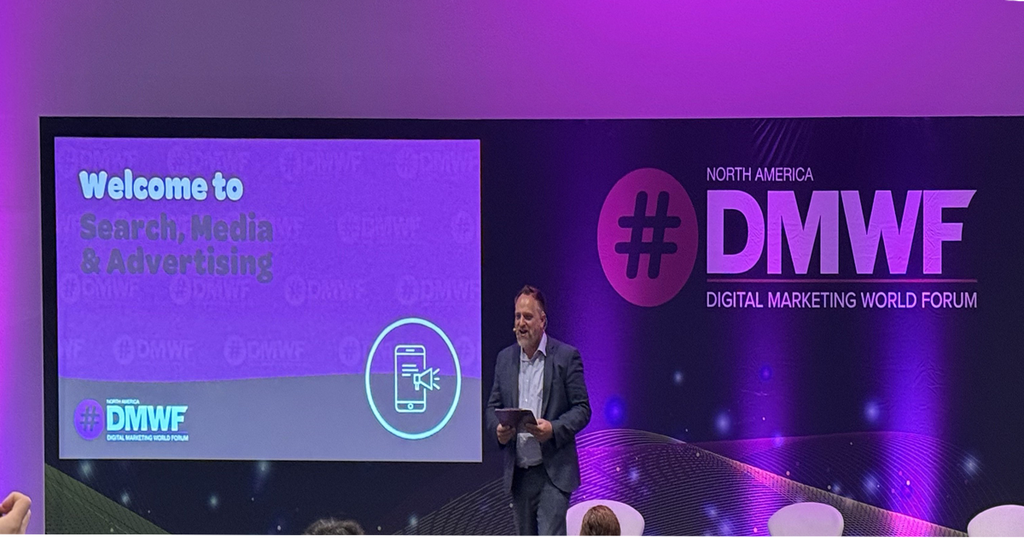
This year’s Digital Marketing World Forum (DMWF) in NYC highlighted how AI is reshaping search, discovery, and performance marketing, while reinforcing the enduring value of trust, creativity, and customer-centric strategy.
The dominant theme across the conference was clear: marketing is entering a new era where success is no longer defined solely by rankings, reach, or automation. Instead, brands must adapt to a landscape driven by AI-powered discovery, predictive audience intelligence, and increasingly fragmented consumer journeys.
One of the most compelling discussions centered on the future of search and brand discovery. During the Search & Discovery Future panel, Jess Barr, VP of Social and Digital at Hunter, challenged attendees to rethink traditional SEO through the lens of what she called “search everywhere optimization.” Rather than relying exclusively on Google rankings, brands must recognize that AI platforms now pull information from social channels, Reddit communities, niche publishers, earned media placements, and brand-owned content. With consumers increasingly relying on AI-generated answers instead of clicking through to websites, visibility is no longer dictated by ranking alone. As Jess noted during the panel, AI is shifting the question from “Did we rank?” to “Were we chosen?”
That shift has major implications for both agencies and brands. Jess pointed out that a brand’s website often accounts for only a small percentage of the sources cited by large language models, highlighting the need for marketers to think beyond traditional SEO tactics. The recommendation was unambiguous: invest in authority signals such as expert commentary, first-party research, schema markup, and strong earned media strategies that help shape how AI systems understand and present your brand.
The discussion on discoverability was complemented by perspectives from Jay Altschuler of Mastercard, who emphasized that trust is becoming one of the most important competitive advantages in an AI-driven environment. He argued that discoverability is increasingly tied to becoming a trusted voice within communities rather than simply occupying the top search position. For brands, this means participating authentically in conversations, delivering value through content and experiences, and maintaining consistency across every consumer touchpoint. His perspective reinforced a recurring conference theme: trust is no longer just a brand attribute; it is a discoverability strategy.
This evolution of search was reinforced during the Customer-First Keywords session, where Michael Louderback of ROAST encouraged marketers to move beyond conventional keyword research and embrace what he described as “demand intelligence.” Rather than focusing exclusively on search volume, he outlined a framework centered on understanding customer motivations, behaviors, questions, and decision-making patterns. By combining keyword data with insights from communities, reviews, forums, and AI-driven prompts, marketers can build richer audience profiles and create content strategies that better align with how people actually seek information today.
Another recurring theme throughout the conference was the growing importance of first-party data. Whether discussing audience intelligence, performance marketing, or AI activation, speakers consistently emphasized that first-party data remains the foundation of effective marketing. However, there was strong consensus that first-party data alone is no longer enough. Brands must enrich, activate, and measure that data effectively if they want to remain competitive.
This became especially evident during the Performance Marketing Now panel. Ryan Berkeley of Bayer Consumer Health discussed how Bayer approaches all media with an accountability mindset, emphasizing the importance of unified measurement rather than relying on individual platform reporting. Speakers repeatedly challenged marketers to look beyond platform-reported ROAS and embrace incrementality testing, marketing mix modeling, multi-touch attribution, and analytics platforms to understand true business impact.
Meanwhile, Martin Corso of Spotify provided a practical example of the power of strong data activation, citing a case where enhanced implementation of Pixel and Conversions API capabilities resulted in a 22% lower CPA. His example served as a reminder that while AI continues to dominate industry conversations, foundational measurement and data infrastructure remain just as critical to performance success.
The conference’s AI-focused discussions tied many of these themes together. During the AI in Media & Audiences session, speakers positioned AI not merely as an automation tool but as a prediction engine capable of identifying audience intent, forecasting behavior, and enabling real-time optimization. The most successful organizations, they argued, will be those that use AI to accelerate decision-making while maintaining strong human oversight. Creative storytelling, transparent measurement, and responsible governance were repeatedly cited as the factors that will separate market leaders from organizations simply adopting the latest technology.
The biggest takeaway from this year’s DMWF is that the future of marketing will belong to organizations that successfully balance technology with human expertise. The tools may be changing rapidly, but as was emphasized throughout the conference, the brands that win will be those that earn trust, understand their audiences, and create value wherever consumers choose to engage.
For more information, visit harmelin.com, or connect with us on LinkedIn or Facebook.
September 2026 QSR Trends: Value, Beverages, Snacking, and Simplicity
As competition intensifies across the QSR landscape, brands are redefining value by turning beverages into destinations, capitalizing on evolving snacking habits, and discovering that sometimes the path to growth starts with doing less… but doing it better.

Value-focused promotions continue to dominate the QSR landscape, with major brands competing around similar price points and bundled meal offers. As consumers grow accustomed to seeing value deals across nearly every chain, restaurants are discovering affordability alone is no longer enough to create meaningful differentiation.
Value Means More Than Price
Value has become a massive battleground in the QSR landscape, with nearly every major chain competing through meal deals, bundles, and promotional pricing. What started as a way to attract budget-conscious consumers has quickly become standard practice across the category. Today, consumers can find a value meal deal almost anywhere, making affordability less of a differentiator than it was just a few years ago.
The strongest performing brands are pairing value offers with something more compelling — whether that’s a seamless app experience, cultural relevance, menu innovation, or consistent execution. These brands understand that a snazzy promotion might get someone in the door, but lasting growth comes from giving customers a reason to come back even after the deal is gone.
At Harmelin, we believe the conversation around value is shifting from price to perception. Consumers aren’t simply asking who has the cheapest meal, they’re asking which brand delivers the best overall experience for their money. As more QSRs compete with similar value offerings, the brands that combine affordability with convenience, consistency, and a strong brand identity will be best positioned to earn foot traffic and loyalty.
Sources:
- The QSR Value War is a Race to the Bottom. Here’s Who’s Winning and Who’s Bleeding
- The QSR Value War of 2026: What Operators Need to Win Guests Back

As traffic growth becomes harder to achieve, QSR brands are increasingly turning to beverage innovation as a method for driving incremental visits and boosting guest engagement. From specialty coffees and refreshers to customized sodas and energy-infused drinks, beverages are creating new occasions for consumers to visit throughout the day.
Beverages Create New Occasions
As traditional traffic drivers become less predictable, restaurant brands are looking for new ways to stay relevant between meal occasions. Beverages have emerged as a particularly attractive opportunity, giving operators a way to generate excitement, encourage repeat visits, and capture spending that might not otherwise result in a full meal purchase. What was once considered a supporting menu category is now becoming its very own growth strategy.
Part of the appeal is that beverages offer consumers an affordable way to treat themselves, even as discretionary spending remains under pressure. A specialty drink often feels like a small indulgence without the commitment of a full meal, making it easier for consumers to say yes. At the same time, customizable flavors, wellness-focused ingredients, and limited-time offerings are helping brands tap into trends resonating with younger consumers.
What’s particularly interesting from a marketing standpoint is how beverages are creating entirely new opportunities to connect with consumers. Instead of competing only for lunch and dinner, brands can now become part of a morning routine, afternoon pick-me-up, or social media-worthy moment. In a crowded QSR landscape, the brands that make beverages a destination — instead of just an “add-on” — will have more opportunities to drive frequency and remain top of mind.
Sources:
- What’s Driving the Beverage Boom, and How Restaurants Can Take Advantage
- The QSR Growth Playbook: Strategies to Win in 2026
- QSRs Pour Resources into Beverages to Stir Up Traffic and Margin
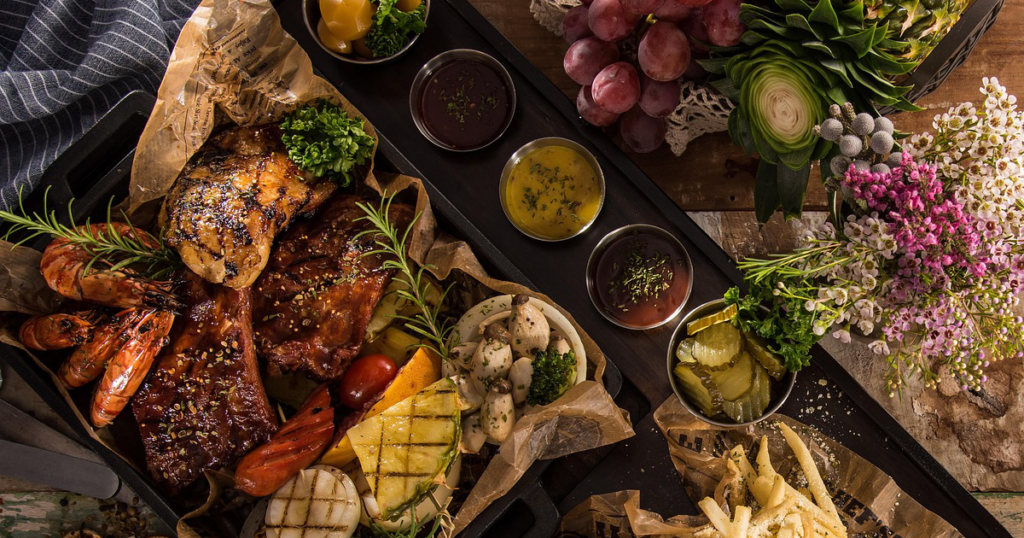
Traditional meal patterns continue to evolve as people increasingly opt for smaller, more flexible eating occasions throughout the day. As a result, QSR brands are finding new opportunities to drive traffic through snackable menu items, shareables, and products designed to fit between traditional mealtimes.
Snacking Shapes New Occasions
For years, QSR growth centered around winning breakfast, lunch, and dinner. Today, consumers are creating their own eating schedules and brands are adapting accordingly. Smaller meals, snackable items, and shareable offerings are becoming increasingly important as guests search for options to fit busy routines and changing appetites. Technomic predicts snacks and smaller portions will become more prevalent across foodservice menus as consumer dining behaviors continue to evolve.
This shift creates an opportunity for restaurants to think beyond traditional dayparts and find ways to engage consumers throughout the day. A mid-afternoon snack, post-work treat, or quick shareable item can generate incremental traffic without requiring a full meal purchase. When customers become more selective with discretionary spending, these lower-commitment occasions might feel easier to justify.
The new opportunity isn’t just selling smaller portions; it’s creating more reasons to visit. Brands can identify the moments between meals and reach buyers at times when competition may be lower and purchase decisions are more spontaneous. Snack-focused occasions also pair naturally with beverage innovation, allowing restaurants to build offerings encouraging additional visits throughout the day.
The bigger takeaway is restaurants no longer need to wait for consumers to be hungry for a full meal. As eating habits become more flexible, brands that successfully build products and marketing around these micro-occasions will have more opportunities to earn a greater share of consumer spending.
Sources:
- 2026 U.S. Foodservice Trend Predictions
- What U.S. Consumers Want from Restaurants in 2026
- QSR Industry Report 2026: Market Size, Segment Analysis, and Trends Reshaping Fast Food
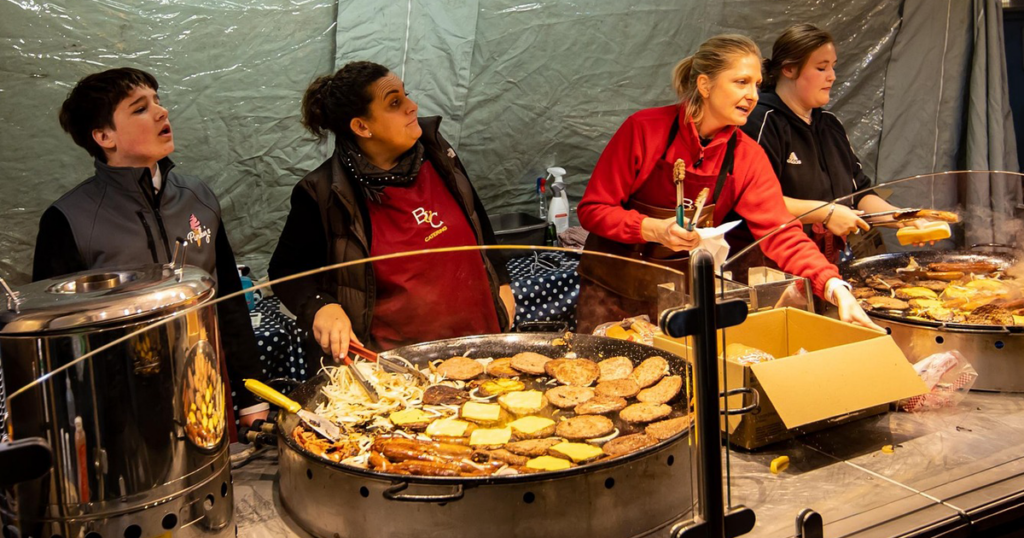
As restaurant operators face ongoing labor challenges, rising costs, and increasing operational complexity, many brands are finding growth through simplification. From streamlined menus to more efficient workflows, restaurants are focusing on doing fewer things better to improve execution, consistency, and the guest experience.
Less Can Deliver More
For years, growth often meant adding more — more menu items, more limited time offers, and more customization. Now, many restaurant brands are finding more isn’t always better. As operators look for ways to improve speed, consistency, and profitability, menu simplification is becoming a priority. In many cases, removing complexity is helping brands deliver a better experience while making operations easier to manage.
A simpler menu can create benefits far beyond the kitchen. Fewer ingredients, fewer processes, and fewer points of friction can help improve service times, reduce errors, and make training easier. It also allows teams to focus on executing the core menu exceptionally well rather than trying to be everything to everyone.
What’s especially interesting is that consumers often reward simplicity. When ordering is easy and the experience is consistently good, guests are more likely to return. While menu innovation will always have a place, many brands are realizing reliability and convenience can be just as powerful as the next limited time offer.
The real opportunity is finding the right balance between variety and execution. Brands that can simplify where it matters, while also doubling down on what they do best, may be better positioned to drive loyalty, improve operational efficiency, and stand out in an increasingly crowded QSR world.
Sources:
- QSR Menu Simplification: Why Chains Are Cutting Items
- Why Menu Simplification Remains an Underutilized Strategy
- QSR Success in 2026: Why the Next Competitive Advantage is Getting the Basics Right
For more information, visit harmelin.com, or connect with us on LinkedIn or Facebook.
What ESTO 2026 Reinforced About the Future of Destination Marketing and Media Strategy
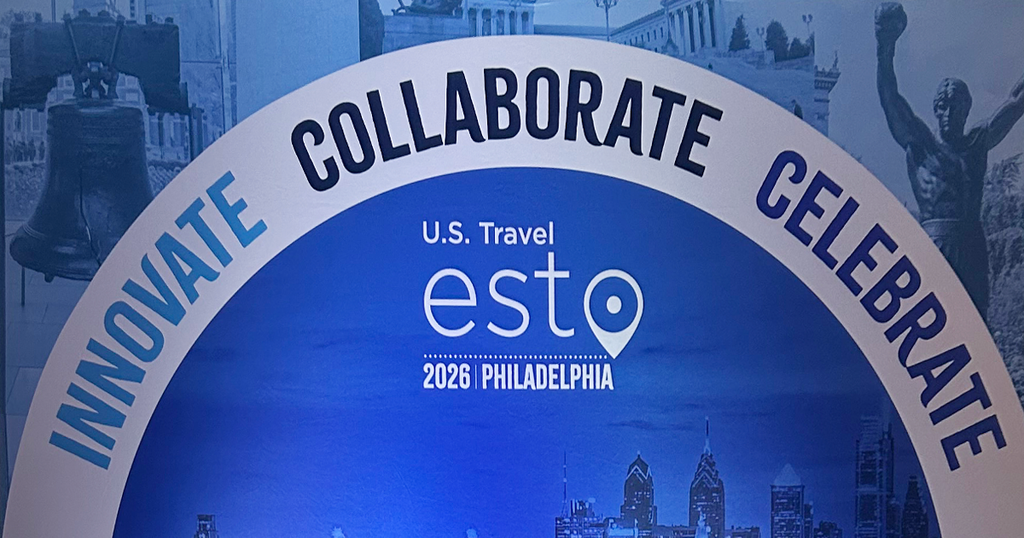
Last month, I had the pleasure of attending the U.S. Travel Association’s Educational Seminar for Tourism Organizations; ESTO for short. Attending ESTO 2026 in Philadelphia gave me a lot to think about, not just as a destination marketer, but from the perspective of someone who spends much of my time thinking about media strategy, audiences and how brands connect with people. One thing became especially clear throughout the conference: destination marketing is changing quickly, and the way we approach media needs to evolve with it. The opportunity is no longer simply to build strong media campaigns. It’s about creating more connected, insight-led strategies that reach the right audiences with the right message, in the right environment, and ultimately moving them toward action.
One of the things I enjoyed most about ESTO was the range of perspectives represented. Hearing from U.S. Travel Association leadership, destination CEOs and marketers from brands like the Philadelphia Eagles, Brooklinen and Sheetz provided me with a broader view of how marketers across industries are thinking about relevance, trust, loyalty and measurable impact. Despite the differences between categories, many of the challenges felt surprisingly similar, particularly as audiences become more fragmented and the media landscape continues to evolve.
For me, one of the biggest takeaways was the growing role of AI in travel planning. AI is quickly shifting from an emerging technology to a meaningful part of how travelers discover destinations and make decisions. Recent research shows 54% of travelers are already using AI in their travel planning, with that figure expected to reach 75% in the future. AI is changing where discovery happens, what content gets surfaced, and potentially how we define media effectiveness.
Another theme that really resonated with me was the importance of connecting the entire consumer journey. The “Disconnected Funnel” session challenged marketers to reconsider the traditional separation between awareness and conversion, and I believe that has significant implications for destination media planning.
ESTO also reinforced something I’ve increasingly seen in destination marketing: strong destination brands are built from the inside out. Neil Frauenglass from our client Visit Philadelphia spoke about the success of their Civic Pride efforts. Conversations around trust, authenticity, resident sentiment, community engagement and destination stewardship highlighted how much the DMO role has expanded. Destinations aren’t communicating only with prospective visitors. Residents, local businesses, community organizations and other stakeholders all play a role in shaping how a place is experienced and perceived.
Finally, I left ESTO thinking about curiosity, adaptability and resilience. Diana Kander’s keynote encouraged leaders to recognize the blind spots that can develop with experience, while Michelle Gielan’s closing keynote explored resilient optimism and its role in sustained performance. Our industry changes constantly, platforms evolve, measurement gets more complicated, consumer behaviors shift and new technologies emerge. Staying effective means being willing to question what has worked before, adapting when the data tells us to and keep learning along the way.
Perhaps the most valuable part of ESTO, though, happened outside the sessions. Being surrounded by people who are actively shaping the future of travel created opportunities for conversations about audience behavior, media innovation, measurement and the evolving role of agency partners.
Key takeaway: The future of destination media strategy isn’t about adding more channels or tactics. It’s about making the entire ecosystem work harder, smarter and more meaningfully together. As agency partners, our role is to bring clients sharper audience intelligence, clearer channel roles, stronger connections across the funnel, thoughtful applications of technology and measurement that ultimately connects media back to traveler behavior and business outcomes.
For more information, visit harmelin.com, or connect with us on LinkedIn or Facebook.
Meghan O’Neil 20th Harmelin Media Anniversary Profile
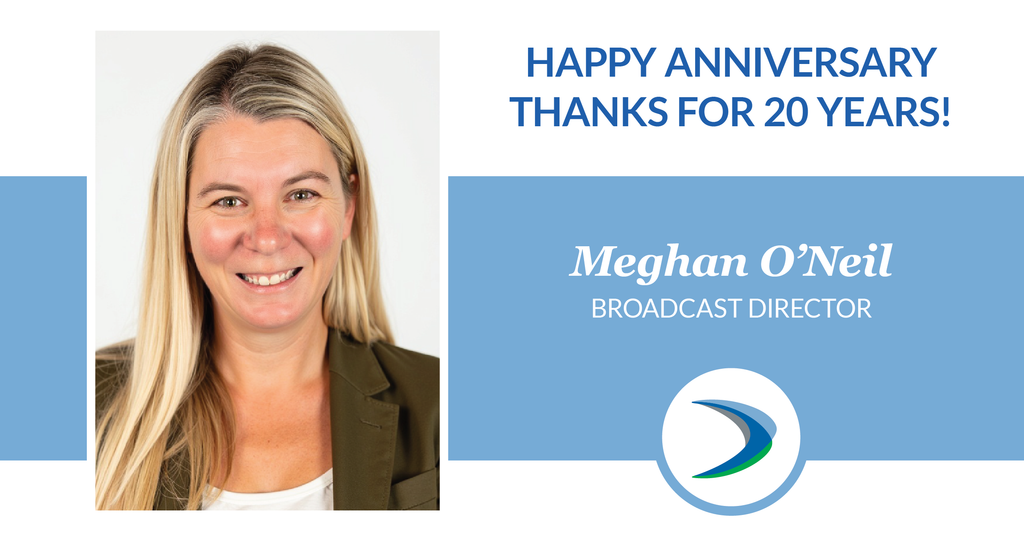
Meghan O’Neil, Senior Local Broadcast Director, recently celebrated 20 years at Harmelin Media. To mark the occasion, we caught up with her to hear her thoughts on the ever-evolving media industry and to get to know her a little better.
How have emerging technologies and AI impacted our industry since your last interview?
One word: efficiency. It seems like there’s a new tool or technology emerging every day that helps us work smarter and more effectively. Clients rightfully expect high-quality work delivered as efficiently as possible, and advancements in AI are helping us do exactly that. These tools allow us to streamline processes, uncover insights faster, and focus more time on strategic thinking. That said, while AI continues to evolve, the human element remains irreplaceable. The relationships we build, the creativity we bring, and the judgment we apply are what truly makes the difference.
What are some consumer trends or behaviors that have shifted in our industry since your last interview?
I think the biggest shift has been fragmentation of media consumption. Even just five years ago, consumers had far fewer options for watching video and listening to audio than they do today. As media professionals, we’re constantly challenged to stay on top of where audiences are spending their time and attention. Having spent 20 years in the broadcast department, I’ve seen firsthand that linear TV and terrestrial radio still deliver unmatched reach and remain incredibly valuable components of a media strategy. At the same time, consumer habits continue to evolve, and it’s our responsibility to meet audiences wherever they are. That means embracing emerging platforms and less traditional media channels to ensure we’re connecting with consumers throughout their day and reaching them from multiple angles with a cohesive message.
Where do you see the industry in the next 1 year / 5 years / 10 years?
From an activation standpoint, I believe we’ll continue to see a shift toward more holistic media buying. Rather than allocating budgets by individual medium or channel, investments will become increasingly fluid, adjusting in real time as audiences and consumption habits evolve. Impressions are everywhere, and each touchpoint plays an important role in the overall media strategy. As a result, I expect to see greater coordination across channels, with campaigns designed to work together seamlessly rather than compete for attention. We’re already seeing this evolution in audio, where radio, streaming, and podcasting are planned and bought as complementary channels that reach audiences wherever they’re listening. Looking ahead, I expect even deeper integration across media channels, with video, audio, social, and other platforms working together to deliver cohesive, full-funnel campaigns that connect with consumers throughout their journey.
Now that we’ve heard your thoughts on the industry, we’d love to learn a bit about you. What’s your favorite way to spend time off?
Traveling and golfing — if I am on PTO, I’m likely doing one or the other. Exploring new places or old favorites always puts me in a good mood and offers a reset. And golfing is just so relaxing for me (if I am playing well, that is). I guess my next step should be to take a golf vacation somewhere; still haven’t done that yet!
What’s a piece of advice you live by?
Don’t sweat the small stuff. I’ve always tried to let things roll off my back. You can’t control how other people act, only how you respond. I always try to maintain a positive demeanor and find some humor in life every day.
How do you usually like to start your day before work?
I have an iced coffee every morning (yes, even in the middle of January) and watch Good Morning America. I’m very much a creature of habit and feel off if I miss either of them.
What’s a small thing that instantly improves your mood?
My dogs. Every time I walk in the door, no matter how long I’ve been gone, they are so happy to see me. My pug Rory gets especially excited, always having a toy in his mouth for me and is wiggle-butting (did I make up that term?) all over to show his excitement.
Reflections from the Harmelin Community
Joyclyn Faust, Vice President, shares: “I’ve known Meghan since she started as an assistant 20 years ago, and it has been incredible to watch her continuously grow and evolve throughout her career at Harmelin. She is always looking for opportunities to grow and advance, and she consistently embraces new challenges with enthusiasm. Her ability to quickly learn new skills, manage a heavy workload, and remain highly efficient makes her an invaluable member of the Broadcast and Audio teams. As a devoted Philly sports fan, she’s proven she can stay committed through anything! Congratulations, Meghan, on 20 years of success at Harmelin. Here’s hoping we’re also celebrating a few Philadelphia sports championships before the next 20!”
Cheryl Klear, Senior Vice President, adds: “Not only is Meghan a Senior Buying Director on the Broadcast team, but she is also the Broadcast Vendor Manager, a member of the Audio team, fully versed in all Audio channels, and part of the Sports team. Meghan is fantastic at managing multiple projects and handles everything efficiently and effectively. She is always looking for new challenges and the best ways to execute them. I am so happy to have been able to work with Meghan over these past 20 years and see her continue to grow and be the extremely valuable asset to Harmelin that she is. Congratulations Meghan!”
Congratulations, Meghan! Thank you for your 20 years of commitment to Harmelin and our clients.
For more information, visit harmelin.com, or connect with us on LinkedIn or Facebook.